Slow Travel
Slow Travel With Children: Fewer Transitions, Better Days
A practical, evidence-led family slow-travel framework for choosing a useful base, sizing days to real capacity, protecting food and rest, and responding calmly when conditions change.
Expanded evergreen planning guide
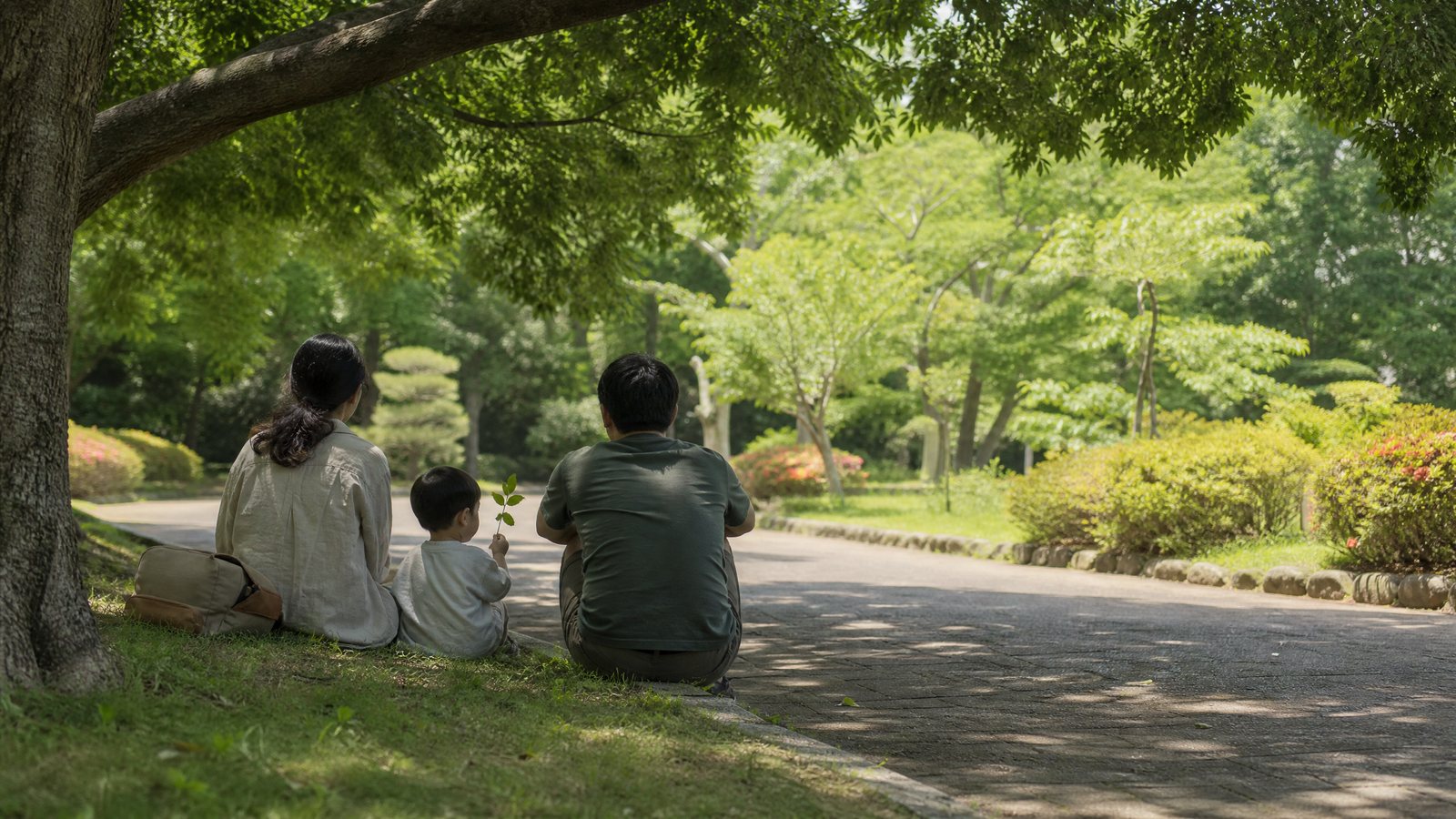
Slow travel with children means reducing the number of times a family must pack, orient itself, wait, eat at an unfamiliar hour, or decide what happens next. It does not mean doing nothing, avoiding all longer journeys, or asking children to enjoy every moment. It means designing a trip whose ordinary work—getting dressed, finding food, using a toilet, resting, catching a connection—does not consume the energy needed to enjoy the place.
The strongest version is built around one workable base, modest commitments, and an easy alternative. It protects curiosity without making the day a test of endurance. The right pace differs with a child’s needs and the destination’s climate and transport. This guide sits alongside our wider slow-travel ideas and practical approaches.
Define success as a usable day, not a full list
An itinerary is successful when it remains workable after a slow breakfast, a missed turn, a sudden shower, or a child who needs a quiet hour. That is a better test than landmarks reached. A transition is any point where the group changes mode: leaving a room, navigating a station, finding a meal, entering a new environment, or settling for sleep. Several small transitions can be harder than one longer, familiar activity.
Start by separating an anchor from the optional parts of a day. The anchor is the one experience that makes the day worthwhile: a museum gallery, a shoreline walk, a neighbourhood market, a ferry crossing, or a visit with relatives. Everything else should be easy to shorten, postpone, or omit. Arrival and departure days are transitions in their own right, not spare sightseeing days.
This may feel restrictive to adults who value variety. In practice, it can stop one delayed connection or difficult meal from spoiling several days. Families whose children enjoy sustained activity can still choose ambitious anchors, with recovery time before and after. For a complementary way to remove pressure from a stay, see how to design rest days that actually restore a trip.
Match the pace to the people travelling
Age is a rough guide, not a diagnosis. Sleep, communication, mobility, feeding, medication, anxiety, sensory processing, and response to crowds can matter more. Plan for the people travelling rather than treating “family travel” as one fixed category.
Infants and toddlers: protect routine and proximity
For infants and toddlers, the useful base makes ordinary care possible without a long journey: a safe place to sleep, a way to manage food, a nearby changing or toilet option, and a short route back. A stroller, carrier, or mobility device is useful only if it suits the streets, stairs, vehicles, and indoor spaces actually used. The trade-off is seeing less in a day; repeat visits to a nearby square or garden give young children recognition and adults a dependable reset.
School-age children: make the day legible
School-age children often benefit from knowing the sequence, even when they cannot control it: walk, look, eat, play, return. Give a genuine but bounded choice, such as choosing between two nearby routes, selecting a snack, or deciding which of two small stops comes first. That turns participation into a clear role rather than a negotiation over every decision.
A paper map, a few local words, a sketchbook, or spotting water fountains can deepen attention without adding a timed objective. The purpose is to make the place understandable, not to turn children into itinerary managers.
Teenagers and mixed-age groups: negotiate autonomy
Teenagers may value time apart from younger siblings, a later morning, or a specific interest. Build that in where appropriate and safe, with an agreed meeting point, contact method, and return time. With a wide age range, alternate whose priority becomes the anchor. One adult travelling alone can choose one contained setting with several levels of engagement rather than divide the group.
Choose a base that supports ordinary life
A base is more than an address: it is where a family can eat, sleep, wash, retrieve a forgotten layer, calm down, and start again. For several nights, judge it by routine friction, not prestige or proximity to one attraction. A less celebrated neighbourhood near food, green space, toilets, and direct transport can be more valuable than a difficult central location.
Trace the trip from arrival point to door with real luggage and child equipment. Count stairs, changes, exposed waiting areas, awkward crossings, and the final tired walk. Then trace the route to food and a low-commitment place for an hour. A low-commitment place is somewhere the group can leave without losing a timed entry: a public square, library, short promenade, or small park, where locally appropriate.
Sleeping arrangements deserve the same scrutiny. Consider sleep timing, an adult’s evening, and night-time toilet or feeding routines. For a child using a wheelchair or medical device, needing step-free access, or having sensory needs, ask detailed place-specific questions. Generic accessibility labels can hide differences in entrances, bathrooms, lifts, surfaces, and evacuation. Confirm features with the responsible local provider; do not infer them from photos. Our guide to planning in walkable neighbourhoods can help distinguish a pleasant map view from a workable daily area.
Use the capacity–commitment test before adding plans
A family slow-travel plan needs a decision rule. Use the capacity–commitment test for each full day. Capacity is the attention, mobility, patience, and recovery likely after sleep, meals, climate, and the previous day. Commitment is what the plan demands through fixed times, distance, queues, unfamiliar settings, and the cost of leaving early. The test identifies days with too many demands; it does not score children.
| Question | Lower-demand answer | Higher-demand answer | Planning response |
|---|---|---|---|
| How many fixed times shape the day? | One or none | Several linked times | Keep only the most meaningful fixed point. |
| Can the group return to the base easily? | A short, familiar route | A long or complex return | Put rest before leaving, or choose a closer anchor. |
| What happens if one person needs to leave? | Others can continue or stop simply | The whole plan collapses | Create a split option or replace the activity. |
| Is food, water, shade, warmth, or toilets predictable? | Easy to find near the anchor | Uncertain or far away | Carry what is suitable and shorten the outing. |
| Does the day follow a travel leg or difficult night? | The group begins rested | Recovery is already needed | Treat it as a settling day, not a full excursion. |
If three or more answers fall in the higher-demand column, remove a timed stop, move the anchor closer, add a recovery afternoon, or use an extra night in the base. A difficult day often reflects a plan with no spare capacity, not poor timekeeping.
The test may not suit a tightly controlled school trip, a short unavoidable transit, or a family facing a fixed medical appointment. Even then, it clarifies where help is needed: food accessible in transit, a quieter waiting strategy, a second adult’s support, or nothing more planned at the destination. For a deeper comparison of the movement trade-off, read train journeys versus short flights.
Shape each day around recovery, not just activity
Rest is a planned part of the day that lets a child regulate—return to a manageable level of energy, emotion, and sensory input. It can be a nap, room break, unstructured play, drawing, reading, or an hour with no decision. Predictability matters more than the format.
A reliable pattern is one anchor, one meal pause, one unstructured window, and one easy return. It allows a slower route home, a repeat bakery visit, or longer at a small exhibit without another rush.
Schedule quiet time where the family needs it, not where a generic itinerary puts it. An early-waking child may need a calmer late morning; a changed time zone may require several low-stimulation afternoons. Do not mistake fatigue for lack of cooperation. Slow travel makes room to respond calmly.
Count the hidden cost of getting around
Door-to-door time includes packing, walking, waiting, transfers, lifts or stairs, seats, toilets, belongings, and the final walk. Assess that full chain, especially for a day trip. A direct-looking route with uncomfortable changes may cost more energy than a longer, simpler route.
On foot and by public transport
Walking can reveal a district, but is not automatically accessible or pleasant. Pavement width, gradients, crossings, weather, crowding, construction, and rest points matter. Build an easy exit, and treat a child’s stops as part of the walk.
On public transport, choose legibility over novelty when tired. Know the line, boarding point, exit, and fallback stop. Keep ride essentials in one reachable bag. Equipment, assistance procedures, and carriage rules differ and can change, so confirm them close to travel, especially for strollers, mobility aids, car seats, and medical equipment.
In cars and on water
Road and water transfers require safety decisions that a slower mindset cannot solve. Child restraint depends on the child, restraint system, vehicle, and local requirements. Check compatibility and instructions rather than assuming a familiar seat works in an unfamiliar vehicle. Around water, active supervision matters more than confidence in swimming ability.
Never place a major attraction immediately after a demanding transfer. Use the first hour to settle, eat something suitable, and learn the immediate surroundings. If the transport itself is meaningful, let it be the day’s anchor. The point is not to minimize movement at all costs; it is to stop treating movement as free time.
Make food a dependable part of the rhythm
Food is both cultural experience and daily logistics. A family is more likely to explore with patience when it has a dependable option: a familiar breakfast, child-appropriate portable snack, or nearby place to sit. That reserve removes the pressure of making every meal prove the trip is adventurous.
Eat before a long transfer, a queue, or an activity where options may be limited. Use a sit-down meal as a reset rather than inserting it between two fixed points. Offer an unfamiliar food without making acceptance a test of gratitude or cultural openness. A small taste, an ordinary alternative, and another opportunity later generally create less conflict than a forced decision at a tired moment.
Young children can become dehydrated more quickly than adults during diarrhoea or vomiting. Where food or water safety needs special attention, seek tailored health advice and know how to obtain local care. Do not improvise treatment from anecdotes. Families managing allergies, formula, feeding equipment, or prescribed diets should confirm transit rules and carry supplies advised by their clinician.
Prepare a Plan B that is easy to use
A Plan B is a pre-decided alternative with a clear trigger, not a vague hope that the day will work out. At each base, identify three options: an indoor alternative, a short outdoor loop, and a no-travel afternoon. Record what each requires—whether it is open, reachable, calm enough, and suitable for the child’s needs—then verify the changing details before relying on it.
Name the trigger in advance. Examples include a weather warning, poor air quality, a delayed connection, a long queue, a child who needs quiet, or a family member becoming unwell. The decision then becomes, “The trigger happened, so we use the alternative,” rather than a tired debate about abandoning a plan. This preserves goodwill because Plan B was always part of the trip.
Weather is an exposure question, not only a temperature question. Heat, cold, wind, rain, smoke, ultraviolet exposure, and air quality can change an outdoor plan. Infants and young children depend on adults to stay cool and hydrated. Choose shade and indoor recovery early, never leave a child unattended in a parked vehicle, and seek urgent medical care for heat-illness symptoms. For a wider seasonal lens, see our guide to weather-aware shoulder-season travel.
Do the health, document, and safety work early
Slow travel does not replace health or safety preparation. Risk varies by destination, transit points, activities, season, a child’s conditions, and access to care. Seek travel-health advice early; four to eight weeks before departure is preferable when international preparation may be needed, though late advice can help. A clinician can advise on immunisations, medicines, food and water precautions, vector risks, and chronic conditions.
Keep an adequate supply of prescribed medicines accessible for the trip and possible delays, following the child’s clinician’s advice. Carry necessary health records in a usable form, and know the local emergency number and a realistic route to care. This article cannot assess individual medical needs or replace professional advice.
International documents for minors are also current-confirmation work. Entry and exit rules, consent evidence, proof of relationship, passport rules, and requirements for children travelling with one parent, another adult, or without a parent can vary by jurisdiction and family circumstances. Check the responsible border, consular, and transport authorities for every relevant destination and transit point. Keep essential papers reachable during travel rather than packed under luggage.
Travel considerately in shared places
A slower schedule makes consideration easier because there is less need to force a way through a place. In accommodation, cafés, transport, museums, worship spaces, and streets, local life continues alongside the visit. Keep voices, games, and belongings appropriate; step aside before studying a map; and follow staff directions. Other people need room to use the place too.
Outdoors, use established paths and facilities, take rubbish away, and leave plants, stones, cultural objects, and wildlife where they are. Visitor-conduct guidance emphasises preparation, durable surfaces, waste disposal, respect for wildlife, and consideration. Give wildlife distance and do not feed it. Ask before photographing people, vendors, interiors, or objects.
These habits work best when they are practical rather than moralising. A child can carry a small bag for litter, wait for a clear invitation before taking a photo, or choose a quieter game while people rest nearby. If a rule is misunderstood, apologise, correct the behaviour, and continue. For more on travelling as a respectful temporary neighbour, read community-respect and visitor etiquette.
Confirm changing details without rebuilding the trip
Separate durable principles from live details. Durable principles include fewer base changes, an easy return route, food before hunger becomes a crisis, recovery after transport, and an alternative for weather-sensitive plans. Live details include operating hours, route diversions, access features, local weather and hazard alerts, air quality, entry rules, document requirements, public-health notices, and site-specific conduct guidance.
Confirm live details through the relevant official or local channel shortly before a move and again on the day when the consequence of being wrong is high. For hazardous weather, use the relevant meteorological or civil-protection warning authority rather than a general forecast. The World Meteorological Organization’s alert framework underscores why an authoritative warning is more useful than a broad weather summary when severe conditions could affect a journey. For transport disruption, use the operator’s current service information; for access or venue rules, use the responsible local organisation.
Compact pre-departure checklist
- [ ] Each full day has one anchor and an easy alternative.
- [ ] The arrival route, base return, food option, toilet plan, and quiet space have been traced.
- [ ] A recovery period follows each demanding travel leg.
- [ ] Child-specific health, food, medication, mobility, sensory, and sleep needs have been considered.
- [ ] Current documents and any required consent evidence have been checked with the responsible authorities.
- [ ] Current weather hazards, air quality, transport operations, access arrangements, and local rules will be reconfirmed at the appropriate time.
Conclusion: keep enough margin to notice the place
The point of slow travel with children is not to make a family trip perfectly smooth. It is to make it resilient. Choose a base that supports ordinary life, make each day legible, treat transport and recovery as real parts of the itinerary, and decide what changes when conditions do. When a family can return early without feeling that the trip has failed, it has created the margin that lets children—and adults—notice where they are.