Slow Travel
Slow Travel for Beginners: How to Plan Less and Notice More
A practical, evidence-led framework for first slow-travel trips: choose a usable base, protect recovery time, respect shared places and confirm the conditions that can change.
Expanded evergreen planning guide
Slow travel is a design choice, not an identity
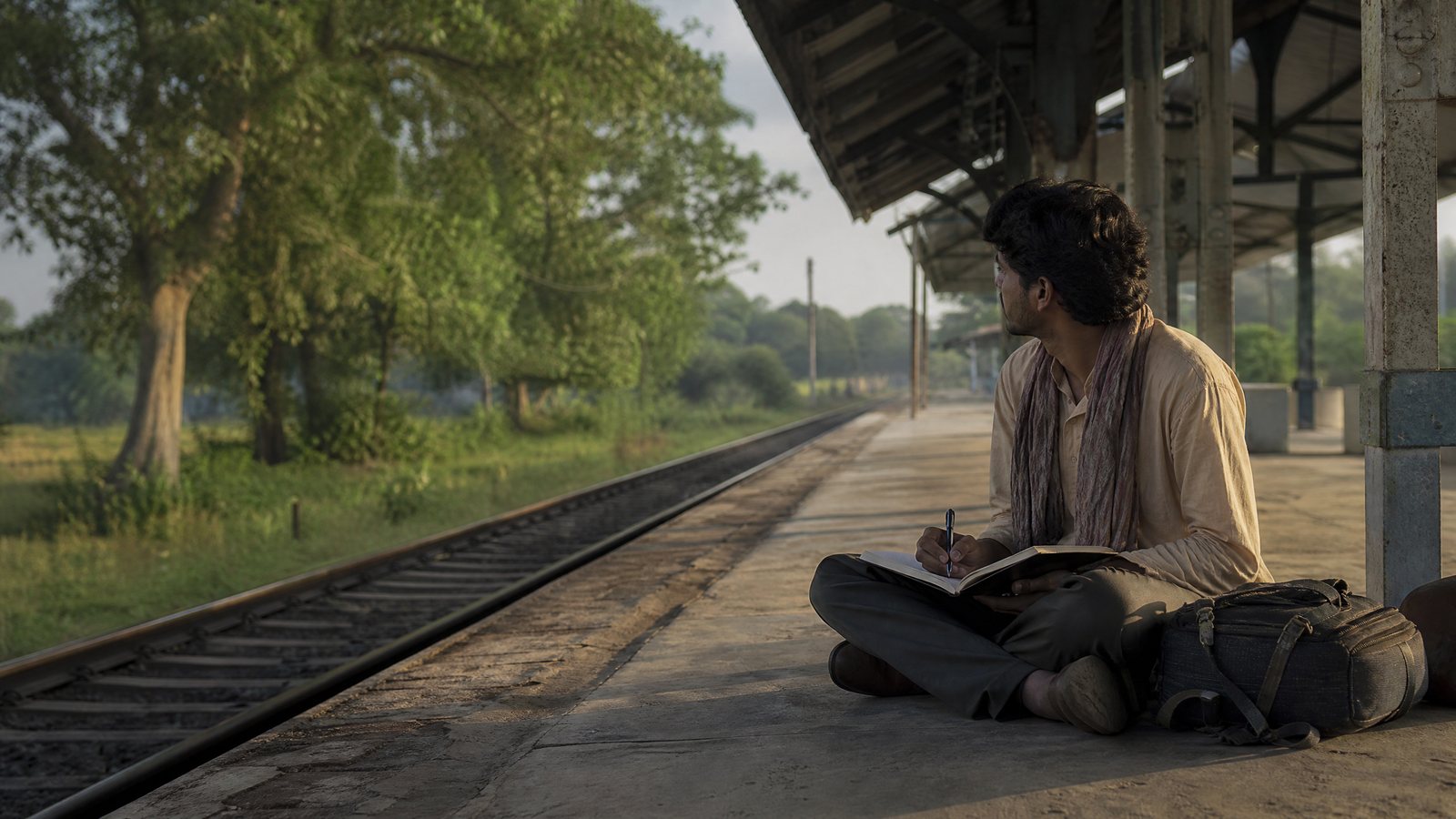
Slow travel means giving a place enough time to become legible. It reduces competing commitments so that a traveller can return to the same street, waterfront, park or district with more context. The outcome may be recognising a useful bus stop, learning when a square changes character or realising that a route is too exposed in afternoon heat. It is a way of designing time, not a contest in moral purity.
It does not require avoiding every flight, car or popular place. Nor does a long stay automatically create attention. A person can change location every day by necessity and still make careful choices; another can remain in one place while following an exhausting checklist. The question is whether the plan leaves continuity to observe, recover and adjust.
A slower rhythm is not automatically lower-impact, cheaper, safer or more accessible. Those outcomes depend on the destination, journey, mobility needs, season and individual choices. Its durable benefit is more modest: fewer transitions make real constraints visible before you commit to the next activity.
For broader themes, begin with the journal’s slow-travel collection. This guide explains how one base, a realistic daily range and a flexible plan work together.
Decide whether one-place travel matches this trip
Slow travel suits a trip whose purpose benefits from repetition: understanding one neighbourhood beyond its main sights, walking routes from the same town, spending time with relatives without filling every gap, or giving children a predictable rhythm. A short break can be slow when it has one clear focus and little transfer friction. A longer journey can still be rapid when every second night requires a new arrival routine.
Start with a one-sentence purpose. “I want to understand this river city beyond its centre” filters choices. “I want to see everything nearby” has no stopping point. Name an interest—food routines, a landscape, architecture, family time or recovery after a demanding period. The sentence is not an itinerary; it helps you leave worthwhile things undone without treating that as failure.
One-base travel may not suit an event with fixed locations, a linear route, a journey to visit several people, a remote region with impractical transport or a narrow time window. A split stay can be sensible when it prevents repeated long transfers. The principle is not “never move”; it is “move for a reason that improves the trip.” Readers comparing approaches can use train journeys and short flights as a separate planning lens.
Choose a base that lets you return
A base is the place from which you begin and end most days. It can be a city district, small town, rural settlement or island community. A strong first base supports ordinary needs, a predictable return route and several day shapes. Repeated packing, unfamiliar arrivals and orientation consume attention that could go toward the place itself.
Assess a candidate base against actual days. Can you obtain food and water easily? Is there somewhere nearby to sit, walk gently or wait out changed conditions? Does the outward and return route fit your time and energy? Are terrain, steps, crowds, lighting, crossings, weather exposure and toilets compatible with your needs? These details determine whether a plan leaves room to notice anything.
Map distance alone is a poor proxy for usability. A short line can conceal steep ground, an awkward interchange, heat exposure or an unpaved final section. A farther place may work better if the route is simple and the return is clear. Identify one low-demand nearby option and one moderate outing; if neither seems plausible, the base may create more effort than it saves.
The aim is not to confine yourself. It is to establish a reliable point of return from which curiosity can expand. The ideas in walkable-neighbourhood travel planning can help turn that return route into an orientation tool instead of a mere commute.
Test day trips with the return-route decision framework
A slow-travel radius is not a circle drawn around a map. It is the range within which an outing still leaves time to arrive, pause, eat, orient yourself and return without making the day feel like a chase. The Return-Route Test is an article-specific framework for deciding whether a proposed day trip belongs inside that radius. It asks whether the outing preserves four things: time, manageable friction, recovery capacity and a reversible alternative.
| Test element | Ask before adding the outing | A plan that passes | A sign to shorten, postpone or separate it |
|---|---|---|---|
| Time | After travelling both ways, is there still unhurried time at the place? | The main activity has a realistic start, pause and finish. | Most daylight or usable energy would be spent in transit. |
| Friction | How many decisions, changes, steep sections or queues must go right? | The route is understandable and a missed step does not collapse the day. | Several tight connections or unclear final kilometres are essential. |
| Recovery | What happens if weather, fatigue, a child’s mood or sensory overload changes the plan? | A rest point, shorter loop or early return is possible. | The only outcome is to push onward. |
| Reversibility | Can you change course without losing the whole day? | A nearby alternative still fits the purpose of the trip. | Access depends on one narrow window or an all-or-nothing sequence. |
Time: protect the useful middle of the day
Travel time is not only time spent moving. Include getting ready, finding the stop or entrance, waiting, walking the last section, eating and returning. The useful middle is when you can engage with the outing’s purpose. If it disappears under movement, a closer place may offer a deeper day, especially on arrival, hot or post-walk days.
Friction: count decisions, not just kilometres
Friction means accumulating small demands: luggage, language uncertainty, crossings, crowding, uneven surfaces, routefinding, noise and few places to pause. An itinerary can be physically short and mentally demanding. Count a route’s decisions and ask which become harder when tired. Lower friction means selecting challenge deliberately rather than discovering it when there is no room to respond.
Recovery: make a lower-demand option legitimate
Recovery is the ability to reduce effort without treating the day as wasted. Give a demanding outing a nearby alternative: a shorter walk, sheltered public space, familiar meal, return to base or unhurried evening. It is particularly important for travellers managing chronic illness, pregnancy, recent treatment, fatigue, anxiety, heat sensitivity or a child’s changing capacity. Energy is information, not a personal failing.
Reversibility: preserve an exit before you need it
A reversible plan has a safe, permitted and understandable way to stop. For an outdoor route, know the turnaround point and carry what it requires. For an urban day, agree that the museum is optional and the neighbourhood walk remains worthwhile. Conditions, official restrictions and personal readiness can change. An exit makes flexibility responsible.
Give each day one anchor and an energy budget
An anchor is the day’s main reason for going out: a museum, market, shoreline path, family visit, workshop, park or historic quarter. It gives direction without requiring every hour to produce an achievement. For most beginners, one anchor plus one easily abandoned companion is enough. Keep the companion close, low-stakes and compatible with an early finish.
Then set an energy budget. This is not a medical calculation. It estimates how much walking, waiting, noise, heat, social contact and decision-making the day can hold before strain. Arrivals, altitude, intense weather and crowds spend it faster. A plan built around energy includes rest before it becomes urgent.
For example, a traveller staying five nights in one district might choose a morning market as an anchor, then allow either a nearby gallery or a return walk along a familiar street. If the market is absorbing, the gallery drops away. If rain changes the walk, the familiar route still gives the day shape. This is not doing less by default. It is deciding in advance which part of the day matters most.
Rest days are not empty. Use them for laundry, a long lunch, a familiar walk, writing notes, time with companions or remaining indoors when conditions make activity unwise. The guide to designing rest days makes such pauses intentional.
Turn buffers into observation time
A buffer is deliberately unscheduled time. It protects against delay, but its deeper purpose is attention. Add one early in the stay, while learning distances and rhythms, and one near the end, when a return visit may reveal more than a new attraction. Do not turn it into a hidden list of alternatives.
Use it to repeat rather than accumulate. Walk the same route at a different time. Return to a public square after learning its layout. Spend time in a library, garden or waterfront if access is permitted. Notice spaces used for everyday movement rather than visitor display. Repetition makes comparison possible and reduces the pressure to turn every encounter into a photograph or story.
Buffers improve judgement under uncertainty. They let you respond to a closure, difficult weather, a delayed connection or tiredness without forcing two plans into one day. They may reveal that an outing relied on an assumption about distance or access rather than current reality. If a day becomes less ambitious, the buffer has worked.
This is why an open afternoon has value even when nothing “special” happens. Slow travel treats the ability to change your mind as a feature of the itinerary. It is not an absence of planning; it is planning for the fact that good decisions need room.
Move through shared places without making them your stage
A slower schedule should make a traveller easier, not harder, for others to accommodate. Streets, markets, places of worship, transport, trails and residential areas are usually somebody else’s daily environment. At a heritage or protected place, tourism can contribute to understanding and conservation when it is managed well, but it can also place pressure on cultural values, nature and communities. The appropriate pace is therefore set partly by site rules and local life, not only by personal preference.
Read and follow posted instructions. Remain in designated areas, observe quiet zones, respect photography restrictions, do not obstruct entrances or commerce, and ask before making close photographs of people. Do not treat a lack of a visible sign as permission to cross private land, enter a sensitive area or disturb wildlife. If the purpose of a place is unclear, choose the more restrained action and seek clarification from the relevant local authority or site manager.
The trade-off is real. A marked route or restricted area can make a day less spontaneous, while a respectful boundary can mean missing a view or shortening a walk. That constraint may protect a habitat, preserve a ceremony, support safety or allow daily life to continue. Slow travel is well suited to this trade-off because it values a thoughtful return over a forced completion. For a fuller discussion of behaviour in shared settings, see community-respect visitor etiquette.
Make the approach workable across access needs and companions
Slow travel should not equate slowness with walking. A traveller using a wheelchair, cane, hearing device, medication, mobility aid or sensory strategy may find that a single well-researched base reduces uncertainty and repeated transitions. Another person may need a vehicle, direct route or planned assistance for the same reason. There is no ethical hierarchy of modes here. The useful question is whether the trip’s pace allows the person to move with dignity and retain choices.
Accessibility information must be treated as specific, not assumed. “Accessible” can refer to different features: step-free entry, surface condition, lift dimensions, seating, tactile or visual information, quiet conditions, toilet access, assistance procedures, space for an aid or the ability to take a companion. A general label cannot answer every one of these. Confirm the feature that matters to you through the relevant local operator, public authority or site manager, and keep a lower-demand alternative that does not depend on uncertain access.
Travelling with children benefits from the same clarity. One familiar breakfast place, a predictable return route and an afternoon with no fixed task can be more useful than a dense list designed for adults. Children may want repetition, play or a slower visual pace; they may also be unable to wait through long transfers. The aim is not to make children conform to an adult version of slow travel. It is to plan around the family’s actual capacities. See slow travel with children for a family-specific extension of this approach.
Health planning also belongs here. International travel risks can depend on personal health history as well as itinerary, duration, timing, travel style and activities. Someone with a complex health history, pregnancy, an underlying condition, recent surgery, essential medication or a higher-risk activity should seek advice from an appropriately qualified health professional. A spacious itinerary can support self-management, but it does not replace individual clinical advice.
Use climate for context and live conditions for decisions
Climate is the long-term pattern of average weather in a place. Weather is the short-term atmospheric condition that affects a particular day. The distinction is essential. Seasonal information can help you choose clothing, identify broad heat, rain or cold considerations, and decide whether a landscape-based trip is a good fit. It cannot tell you whether an individual day will be safe, pleasant or accessible.
Use long-term context to set expectations, not to make a promise to yourself. A season commonly associated with dry conditions can still bring rain; a generally mild month can still produce heat stress, wind, snow or smoke. Microclimates, altitude, coastal exposure and urban surfaces can make conditions differ substantially within a small area. A slow itinerary copes better because it gives weather-sensitive plans an alternative rather than treating them as non-negotiable.
Close to departure and again during the trip, confirm current forecasts, warnings, site conditions and transport status through the relevant official or local channel. For outdoor activity, take seriously any instruction to avoid an area, alter a route or prepare for hazards. If conditions change, reduce the plan first: choose the closer route, the earlier return or the indoor alternative. The journal’s seasonal planning articles explain how to use seasonal context without confusing it for a day-by-day forecast.
Confirm the variables a slow plan cannot settle
Good slow-travel planning separates durable principles from changing facts. The durable principles are to use a manageable base, protect recovery time, understand limits, respect shared places and prepare a backup. The changing facts include entry rules, border requirements, health notices, local safety information, weather warnings, access conditions, permits, opening arrangements, terrain, public-transport operations and assistance availability. No article can settle those facts for a particular date, traveller or destination.
Make a compact confirmation check at two moments: close to departure and immediately before a weather-sensitive, remote or tightly timed activity. Use the official body relevant to your nationality for international entry and safety matters; use the responsible local authority, transport operator or site manager for local access and operating conditions. Where personal health is material, use an appropriately qualified clinician. Do not rely on an old screenshot, a traveller’s anecdote or a seasonal average when a current condition determines whether an activity is sensible.
Compact slow-travel checklist
- Write one sentence describing what this trip is for.
- Choose a base with ordinary needs, a workable return route and a low-demand nearby option.
- Put one anchor, one optional companion and genuine buffer time into each full day.
- Apply the Return-Route Test to every more distant outing.
- Confirm the current facts that matter to your route, health, access and safety.
- Keep a permitted, lower-demand alternative for weather, fatigue, disruption or changed conditions.
- Follow local rules and avoid turning shared daily spaces into an obstacle course for others.
These checks do not remove uncertainty. They reduce the chance that a rigid plan will push you past a warning, an access limit or your own capacity. The publication’s editorial policy explains the distinction between general planning guidance and destination-specific information that needs current confirmation.
Conclusion: leave room to understand one place
A first slow-travel trip succeeds when it gives you a clearer relationship with one place, not when it produces the longest list. Choose a base that makes return easy, decide what each day is really for, test distant ideas against the reality of the return route and preserve enough space to respond responsibly. Repeat a walk. Let an optional plan go. Take a rest day before you need one.
The point is not to perform a slower identity. It is to make a trip more attentive, practical and considerate of the people and environments that make a place worth visiting. Plan less in the sense of making fewer fragile commitments; prepare more in the sense of knowing the current conditions and your own limits. That balance leaves room to notice more.