When to Go
Winter Sun in India: How Conditions Change From Coast to Desert
India’s winter is a set of regional weather systems, not one reliably warm season. Choose coast, desert, plains or hills by the kind of day you want and the disruption you can absorb.
Expanded evergreen planning guide
India can suit a winter-sun journey when “winter sun” is treated as a route-design question, not a nationwide promise. A day by the Arabian Sea, a morning in a northern plains city, an afternoon at Rajasthan’s open sites and a night in a Himalayan town can call for different clothing, timing and tolerance for change. The useful distinction is not merely north versus south. It is whether the route is coastal, dry and exposed, low-lying and fog-prone, or elevated and access-sensitive.
This guide separates durable context from current conditions. Durable context includes climate normals, altitude, seasonal rain regime and the usual daily swing in comfort. Current conditions can alter a particular day: a forecast, warning, visibility report, air-quality reading, road restriction or transport update. Use the first to select a region; use the second to decide whether an early start, transfer or exposed activity still works.
Start with the kind of winter day you want
Begin with a day that would feel worthwhile even if one headline attraction becomes impractical. Someone wanting unhurried walks, a café stop and time near water has different needs from someone seeking heritage sites, rail-connected city life or high-elevation views. Naming that preferred day exposes trade-offs before transport becomes fixed.
Think in terms of weather exposure: time spent affected by wind, dampness, cold, strong sun, poor visibility or uncertain access. Exposure is not the same as discomfort. A cool evening is manageable when a warm indoor base is nearby; it becomes consequential after a long remote excursion with no simple way to shorten it. A slower rhythm can lower exposure without thinning out the journey. RAAHCHAL’s guide to designing rest days is useful when weather is one reason to leave space.
For a group, the least cold-tolerant, least mobile or most time-constrained person should shape the length and remoteness of the day. That is practical planning, not over-caution. It prevents a difficult decision after conditions worsen.
Coastal India: moderated temperatures, distinct rain patterns
The sea commonly softens the day-to-night temperature shift found in an inland desert or high valley. This can suit travellers who want long periods outdoors without a sharp evening transition. It does not make every coast dry, identical or suitable for every water plan. Wind, humidity, surf, tide and local rain patterns decide how a shore day feels.
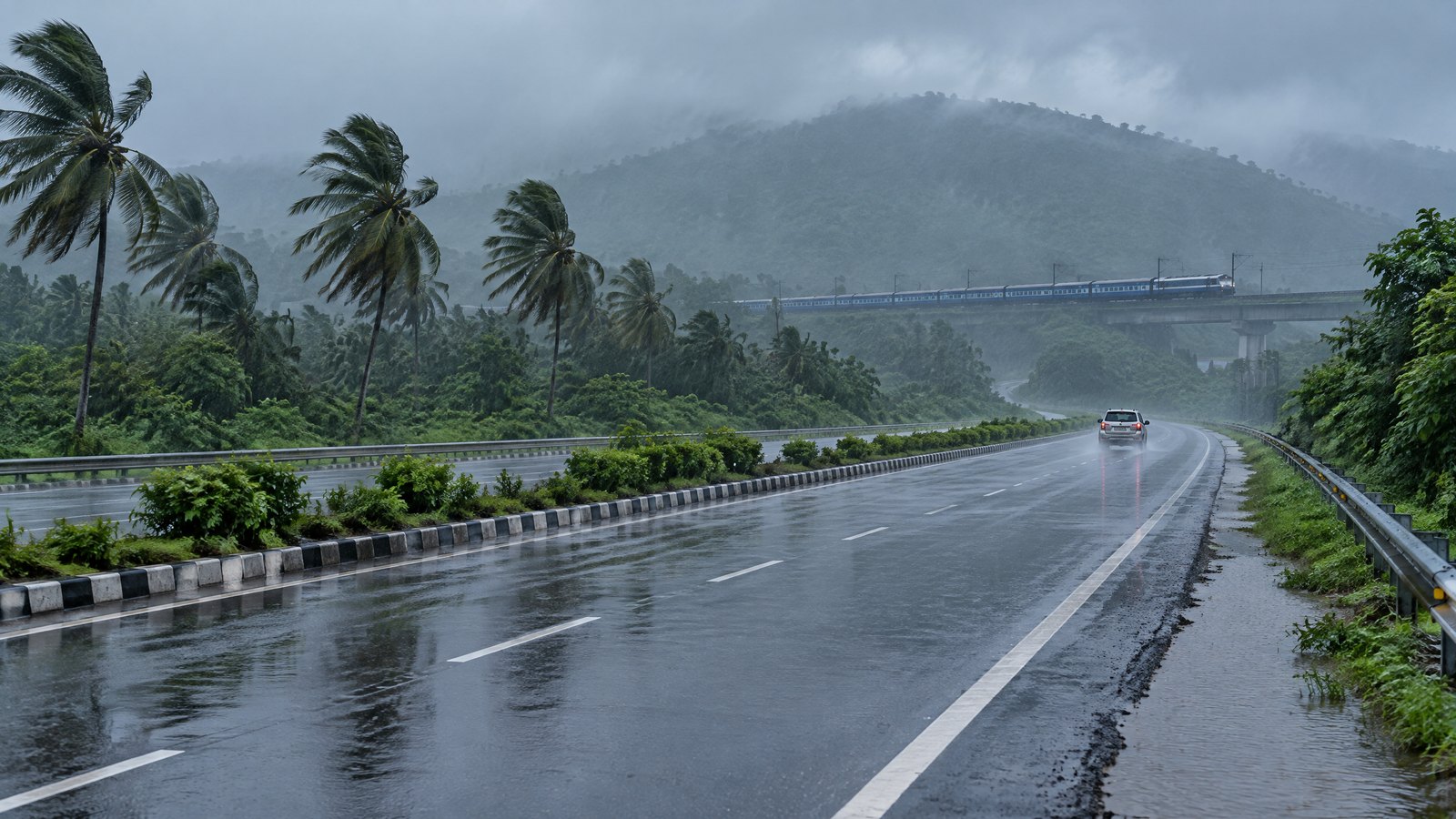
On much of the west coast, winter comes after the southwest monsoon. The planning question is often wind, mid-day heat and what to do when marine activity is restricted, rather than persistent monsoon rain. Conditions can differ over short distances, so a local forecast outranks a broad seasonal label. Give each coastal base at least one worthwhile land-based option: a town walk, museum, market or long meal can preserve the day when the shore is unsuitable.
Treat the shoreline as an active environment
A beach is not automatically a swimming plan. Rip currents are narrow flows moving seaward that can pull a person away from shore; wave and tide conditions can also alter local risk quickly. Follow authority signs, lifeguard instructions and access restrictions instead of judging safety by a calm-looking surface. This matters particularly for children, weak swimmers, people unfamiliar with the sea and anyone drawn to an isolated shore. Identify a land-based option before leaving, and do not pressure a boat crew or driver to proceed when official restrictions apply.
A light wind layer, sun protection and footwear that manages wet paving have wider use than packing only for a hot afternoon. For people using mobility aids or with limited balance, the relevant question is whether the actual route from vehicle to shade, seating, toilets and firm walking surfaces is manageable. Confirm these details with the relevant local venue or authority shortly before the day.
The southeast coast: early winter can still be wet
Tamil Nadu and the adjoining southeast coast need a separate lens. The northeast monsoon is the October-to-December rainfall regime that supplies a large share of annual rainfall to southeastern peninsular India. Its timing means that early winter is not automatically the dry break suggested by an all-India description of the season. October is a transition month, and conditions can vary among nearby districts.
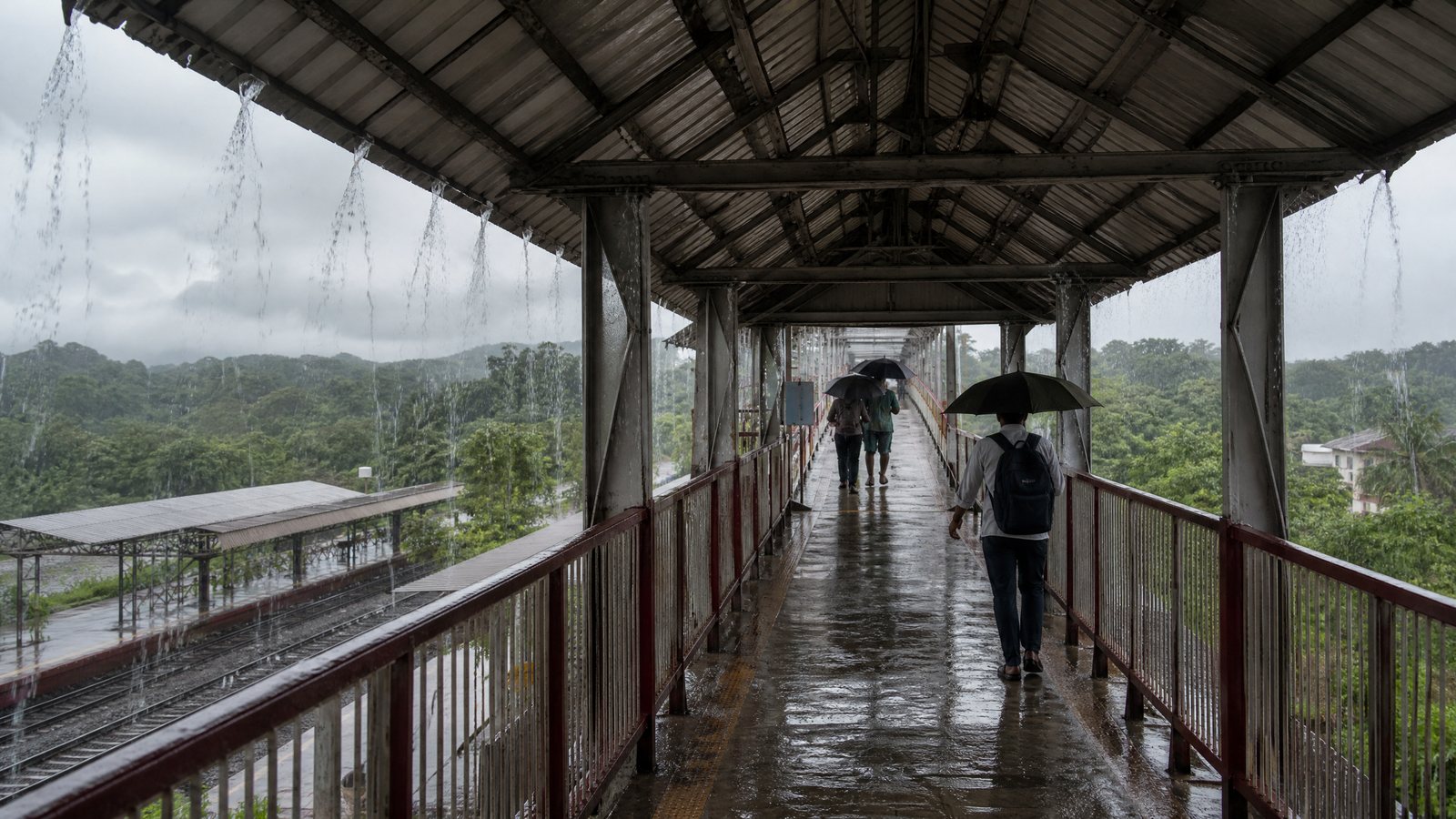
This does not rule out a southeast-coast itinerary. It changes its structure. A route through Chennai, Puducherry or a smaller Coromandel settlement is more resilient with sheltered cultural activity, walks that can be shortened and an unassigned half-day. A compact rain layer and protection for electronics are usually more useful than heavy equipment. Wet pavement can change the pace for anyone using a stroller, cane or mobility aid.
A monthly pattern cannot predict a chosen week. It explains why a current forecast matters here in early winter; it cannot identify a wet afternoon in advance. RAAHCHAL’s guide to how far ahead weather is useful offers a useful way to match confidence to the forecast window.
Desert and dry interior: plan around the daily swing
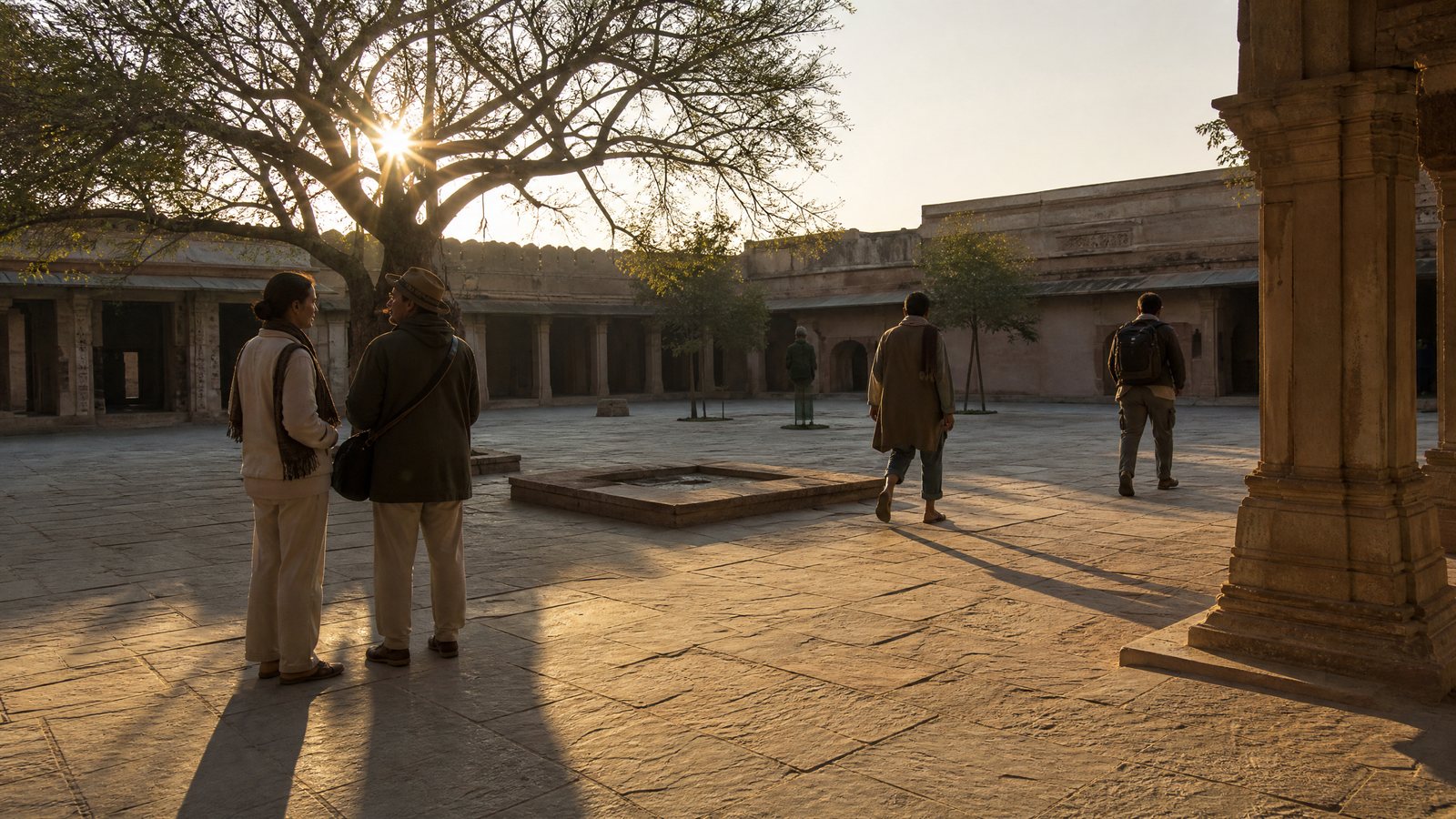
Rajasthan and the Thar fringe can be appealing in winter because open landscapes and unshaded heritage sites may be more comfortable than in hotter months. The central planning variable is the diurnal temperature range: the change from the day’s warmer period to its cooler period. It can be pronounced in dry places. A warm courtyard at midday may give way to a cold, still evening, particularly when sitting outside or leaving before sunrise.
Sequence exposure rather than abandoning outdoor time. Put the longest unshaded walk or dune time in the part of the day that suits the group, then finish near a town or lodging where people can add a layer, rest or change plans. Closed shoes, a breathable layer, a warmer layer and sun protection belong together. Water still matters on long outdoor days; sun and dry air can make thirst easy to overlook.
Set the remoteness of an excursion for the person with the lowest tolerance for cold, dust or lengthy vehicle time. A traveller who enjoys a two-hour walk but dislikes travelling after dark may prefer a shorter late-afternoon desert visit with a daylight return. Keep a meaningful alternative near the base, such as a historic lane or unstructured time, so a weather-driven change remains a choice. Ask before close photography of people, homes, animals or religious activity. RAAHCHAL’s visitor-etiquette guide explains how this respect can become ordinary behaviour.
Northern plains: fog, cold mornings and air quality
The Indo-Gangetic Plain can support rich city, food and history-focused travel, yet winter logistics may turn on visibility rather than rain. Fog is water droplets near the ground that reduce visibility. Research using observations from 69 Indian sites identifies winter fog as a major hazard in the plains, with December and January especially relevant around Delhi. It can affect roads, rail services and flights, sometimes past the time needed for a careful connection.
This does not mean every winter morning is foggy or plains travel should be avoided. A tightly connected route has more operational risk than one with a spare night, flexible first morning or arrival not followed by a long road journey. A timetable is a plan, not proof that a service will run on time. On a foggy day, current official transport information matters more than a historical schedule.
Keep a visibility issue separate from an air-quality decision
Mist, haze, fog and poor air quality can coexist, but they are not the same thing. A visitor with asthma, cardiovascular disease, a respiratory infection, young children or sensitivity to particles should make a location-specific air-quality check and follow clinical advice where appropriate. The national system reports by city and station, which is more useful than assuming one reading describes a large region. Move strenuous outdoor activity, long roadside walks or a dawn run when current advice and personal symptoms call for it.
Plain-city cold can feel penetrating when mornings are damp or sun is obscured. Use layers rather than one bulky item: a breathable base, insulation and a light outer layer can adjust to a chilly platform, warm vehicle and sunny courtyard. This suits most independent travellers. Someone with an immovable onward connection, a need for dependable transfer assistance or little tolerance for waiting should use fewer changes and a larger time margin.
Hills and mountains: altitude changes the planning problem
A hill itinerary is not merely a cooler version of a nearby city. Elevation, slope aspect, valley shade, snowfall, wind and the exposure of the access road can make neighbouring settlements feel markedly different. At higher Himalayan locations, snow and freezing conditions may be central; in lower foothills, cold mornings, early shade and cool evenings can be the defining pattern.
Snow is a poor promise. Evidence from the Hindu Kush Himalaya shows that winter accumulation and snow cover can vary markedly by season, including unusually low-snow winters. A white landscape, a pass opening, trail conditions or a local service operating are therefore current-status questions, not calendar entitlements. This matters when the route relies on one mountain road, small airport, cable route or high-elevation walk.
Choose a mountain base that still works without snow
Choose a base that has value at lower intensity: a compact centre, sheltered viewpoint, cultural activity, indoor warmth and a lower-elevation alternative all reduce dependence on one snow condition. People travelling with children, older companions, medication needs or limited mobility may find a lower base with short optional excursions more suitable than a remote high overnight stop. Allow time to acclimatise when travelling higher, and take locally issued closure or avalanche instructions seriously. A closure calls for a changed plan, not an informal workaround.
That approach also limits pressure on drivers, road crews and hosts managing genuine weather constraints. Slower, lower-risk choices can be respectful as well as comfortable. RAAHCHAL’s slow-travel collection develops this emphasis on pacing rather than constant movement.
Use the four-question winter-sun decision framework
This article-specific framework turns a broad seasonal idea into a regional choice. Answer in order. If one answer is uncomfortable, revise the route rather than trying to offset it with additional transfers or a fuller schedule.
- What experience cannot be missed? State it plainly: shore walks, desert light, city museums and food, or mountain scenery. If the real priority is mild rest, a low-elevation coast may fit more naturally than a snow-led mountain route.
- Which exposure can the group accept? Compare wind and humidity, evening temperature change, fog-related waiting, or cold and access uncertainty. Choose the exposure every member can manage.
- What is the fallback in one local area? A robust fallback is a good day that needs no risky road, water crossing or tightly timed connection.
- Where is the time margin? Identify the night or half-day that can absorb a delay, warning or road change. If no margin exists, the plan is too brittle for winter variability.
| Winter priority | Regional starting point | Main trade-off | A resilient version of the day | May suit / may not suit |
|---|---|---|---|---|
| Milder outdoor time near water | Coast | Wind, humidity, local rain and marine restrictions | Pair a shore walk with a town-based alternative | Suits relaxed pacing; not ideal when every day relies on water access |
| Heritage sites and open landscapes | Desert or dry interior | Day-to-night temperature change and exposed travel | Walk in daylight, return before dark, retain a town-based fallback | Suits layer-friendly travellers; less suited to cold evenings or remote drives |
| Cities and rail-linked culture | Northern plains | Fog, cold mornings and possible transport delay | Add an arrival buffer and retain a light first morning | Suits flexible dates; less suited to immovable short connections |
| Views and mountain culture | Hills or lower foothills | Cold, snow variability and changing access | Choose a lower base with worthwhile local activity | Suits those comfortable with plan changes; less suited when one high route must work |
The framework is not a ranking. Coast, desert, plains and hills offer different forms of a good winter day. The right fit is the region whose normal trade-off matches the trip’s real purpose and whose disruption the group can absorb.
Make the itinerary flexible without making it vague
Flexibility is not an empty day on every page. It is a route with priorities and fewer cascading dependencies. Use bases of two or three nights where fog, mountain access or a weather-sensitive shoreline is relevant. Place the most weather-dependent activity where another day could replace it. Do not make a final transfer day carry a long road journey and an important personal commitment.
Use a two-layer itinerary. Layer one is the stable structure: base towns, rest intervals, essential transport legs and activities worthwhile in ordinary conditions. Layer two is the weather-sensitive choice: a boat outing, exposed walk, mountain road, dawn view or desert circuit. The second layer can move, shorten or disappear without collapsing the rest of the route.
For instance, a three-night plains-city stay might give the first day to neighbourhood-scale walking and indoor cultural time, leaving a fog-affected arrival manageable. The clearer later day can hold the longer excursion. In a hill town, enjoy the town and a low-elevation viewpoint first, then attempt the higher route only when weather and access support it. These patterns do not assume a fixed outcome; they avoid making narrow window carry the trip.
Pack, pace and participate with care
Pack for transitions, not one imagined afternoon. A compact system commonly works: sun protection; a breathable top; insulation for cold interiors, dawns or evenings; an outer layer for local rain or wind; and footwear for wet paving, dust or uneven ground. Keep essential medication, identification, warmth and a charged means of communication with you during transfers rather than in a separately moved bag.
Use daylight deliberately. In the desert, this can avoid the coldest part of an outdoor day. In the plains, it leaves margin if morning visibility shifts the timing. In the hills, it keeps the longest or least reversible movement out of an unfamiliar road after sunset. It does not mean every day needs an early start.
Compact winter-sun checklist
- Compare the relevant station’s monthly climate normal, then check the local official forecast and warnings close to departure.
- Keep one weather-sensitive activity movable and one worthwhile alternative within the base area.
- Add a buffer before essential onward movement where fog or mountain access could intervene.
- Carry sun, wind, rain and evening-cold layers in one compact system.
- Follow local authority guidance on beaches, marine activity, roads, paths and avalanche risk.
- Ask before close photography and adjust pace and route to the group member with the greatest access or comfort need.
Respect is operational, not decorative. At religious and residential places, dress and behave appropriately, seek consent before close photography, reduce noise and follow local guidance. Do not use a changed forecast as a reason to crowd a small indoor place or push into restricted terrain. RAAHCHAL’s guide to slow travel with children offers a child-aware version of this rhythm.
Confirm close to departure—and recognise this guide’s limits
Climate normals describe a historical average for a station and month. They help compare places, but cannot predict a cold wave, rain spell, fog episode, marine restriction, road closure or local service operation. Forecast confidence improves as the date approaches, while retaining limits around complex coastlines and mountain terrain. Treat a warning as decision information, not an inconvenience to evade.
Shortly before departure and again on transfer days, confirm the local official meteorological forecast and warnings; visibility where it affects the route; relevant road, pass, marine or local-access status; and live information from the operator of essential transport. Use the official rail-status channel for rail movement and the relevant airport, carrier or road authority for other journeys. If air quality matters to a group member, check the current city or station reading through the national reporting system and adjust activity to personal health needs.
This guide does not assess visa requirements, medical suitability, route legality, individual accommodation accessibility, safety at a particular beach, or conditions on a specific trail. It does not claim that a particular destination, service or activity will be available. Ask the relevant local or official channel about details that affect your decision, especially when access, mobility, weather sensitivity or health makes a changed plan costly.
Conclusion: choose a region that remains good in ordinary winter conditions
Winter sun in India is most rewarding when understood as regional possibility rather than uniform warmth. Coast, desert, plains and hills each offer a distinct good day—and a distinct disruption to plan around. Choose the experience that matters, accept its normal trade-off, protect a local fallback and leave time for current information to reshape the schedule.
It creates a route with a coastal walk that does not require a boat, a desert afternoon that ends in warmth, a city stay that can absorb fog, or a mountain base satisfying without fresh snow. Such a journey is calmer, safer and more connected to the place itself.