When to Go
The Rainy-Day City: How to Plan Without Treating Weather as Failure
Build a rain-ready city day around one cultural anchor, short door-to-door links, accessible route choices and clear weather thresholds—so changing conditions refine the plan rather than defeat it.
Expanded evergreen planning guide
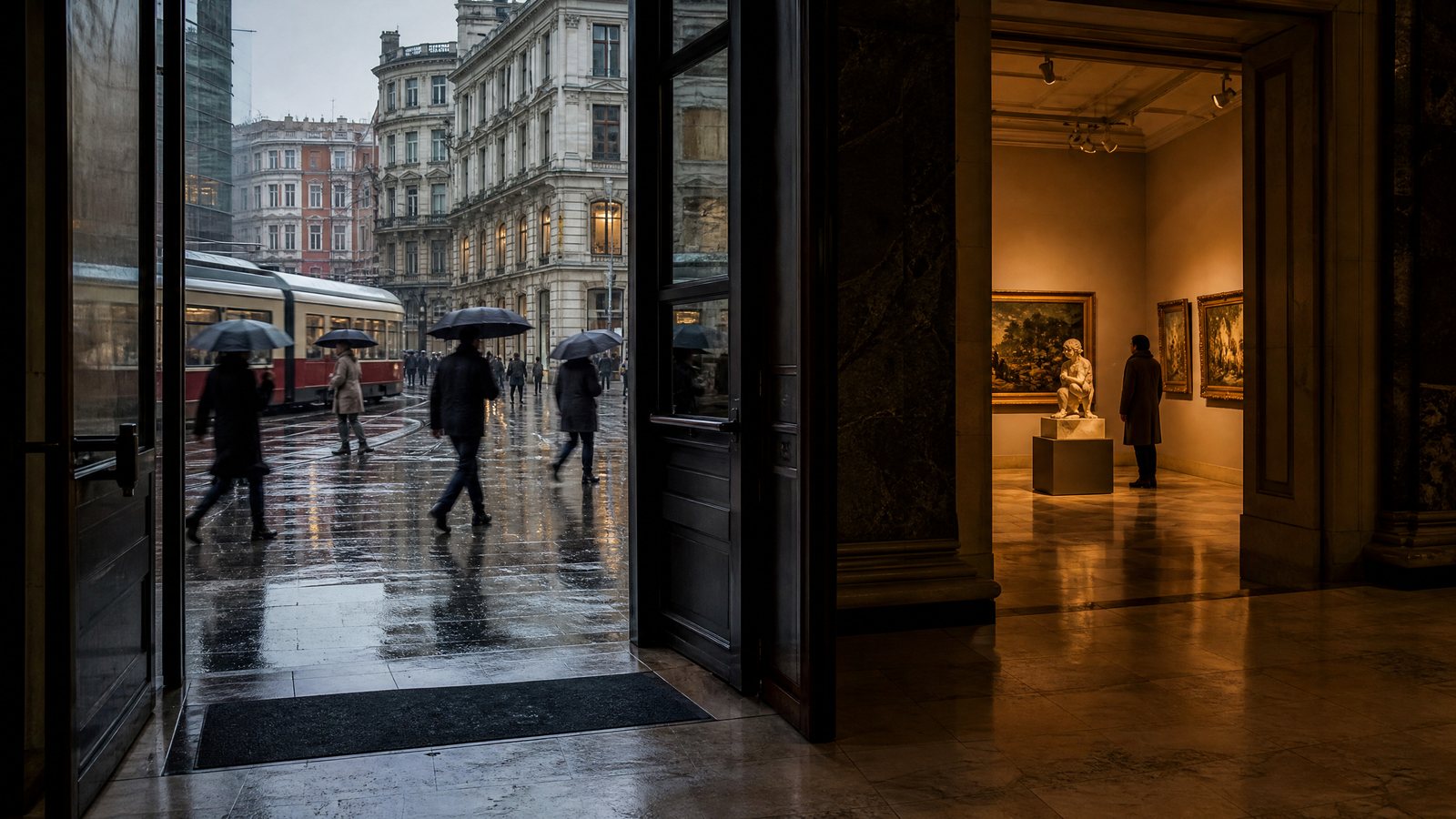
Rain need not turn a city day into a sequence of disappointed substitutions. It does, however, expose weak assumptions: that every pavement is equally easy to use when wet, that a transit connection will run as usual, or that an indoor venue is simply an empty shelter waiting for visitors. A better plan is a compact, adjustable day built around one neighbourhood, one cultural anchor and a few short links that can be abandoned without losing the day’s purpose.
Heavy rain, flooding, strong wind and thunderstorms change the safety calculation; official instructions take precedence over an itinerary. On an ordinary wet day, a smaller radius can create time to follow one exhibition closely, notice a station concourse or stay with lunch rather than hurrying to the next pin.
Begin with a rain-ready brief, not a rescue list
Before selecting places, decide what the day is for. A useful brief pairs an interest with a place type: visual art in a civic district, a library and older commercial streets, or a performance neighbourhood with a historic interior. This limits the impulse to scatter indoor alternatives across the city. It also makes room for the slower, place-based attention described in our guide to slow travel: fewer stops can produce a fuller sense of a district when weather makes movement effortful.
Give the day a primary cultural anchor—a museum, public library, historic house, conservatory, archive, performance venue or other substantial interior—and two nearby alternatives. “Nearby” means no fragile cross-city transfer, not merely another famous name on a map. One alternative might be quiet seating; another, a short self-contained visit. This works for solo travellers and families needing a reset point. If someone has a timed obligation or a difficult journey, one confirmed fixed point and a direct return route are safer.
A brief is deliberately modest. “Understand one neighbourhood through its public interiors and two streets” is more workable than “see the city despite rain.” It also gives companions a shared standard for deciding when to stop. For a wider approach to choosing places that connect comfortably on foot, use this planning guide to walkable neighbourhoods before narrowing the route for weather.
Read rain as an impact threshold, not a yes-or-no forecast
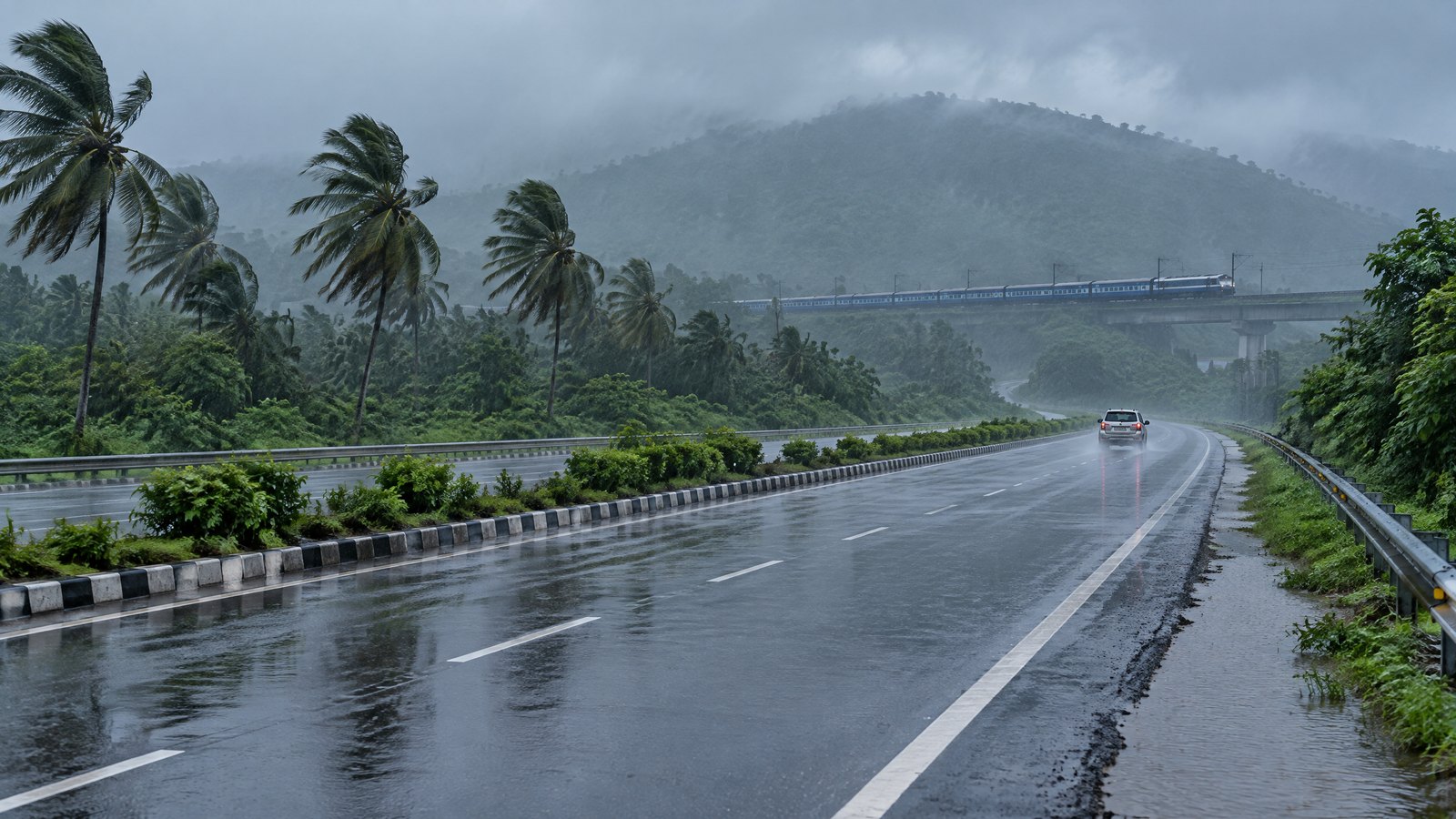
A percentage of precipitation alone does not decide whether a city day works. Impact threshold means the point at which a condition changes the route, timing or safety decision. Rain intensity, gusts, temperature, daylight, lightning and water accumulation affect different parts of the day. A short shower may only move a walk until after lunch. Sustained rain can slow crossings and boarding. Wind may make an umbrella awkward around crowds and corners. An official warning, thunder, floodwater, a closure or an emergency instruction moves the question beyond itinerary design.
Use three operating modes
Think in modes rather than predicting every hour. In rain-ready mode, rain is ordinary: keep walks short and retain the anchor. In reduced-radius mode, weather or energy makes exposure unpleasant or mobility less reliable: choose fewer links, seated time and less walking. In safety-first mode, official warnings, thunder and lightning, flooding, serious wind impacts or local instructions mean that sightseeing yields to safety.
This distinction keeps durable guidance separate from changing information. It is durable advice to avoid walking or driving through floodwater and never to go around a barrier. It is changing information whether a particular underpass, street, transit line or venue is affected today. If thunder is heard or lightning is seen, move to a proper enclosed building rather than treating an awning, open-sided shelter or a tree as protection. Do not use an umbrella as a reason to remain outside in a thunderstorm.
Weather is probabilistic; an itinerary should be conditional. The practical question is not “Will it rain?” but “What will we do if the next outdoor link is no longer reasonable?” For an explanation of why a forecast is more useful as the date approaches and how to turn it into a planning decision, see how far ahead weather is useful.
Apply the Rain Radius decision framework
The Rain Radius is the maximum exposure and complexity the day can tolerate while still being comfortable and safe for the people taking it. It is not a distance target. It combines four variables: weather impact, route friction, personal access needs and the consequence of delay. Use it before leaving and again whenever conditions visibly change.
| Decision factor | Questions to ask | Low-friction signal | Reduce the radius when… |
|---|---|---|---|
| Weather impact | Is rain steady, wind-driven, cold, electrical or producing water on the route? | Brief rain with no warning and a clear, short link | There is thunder, a warning, flooding, poor visibility or strong gusts |
| Route friction | How many crossings, slopes, exposed waits and changes are involved? | One direct, familiar connection with places to pause | The route has long waits, steep or uneven surfaces, crowding or multiple transfers |
| Access and energy | Who is travelling, and what makes wet conditions harder? | Everyone can use the route comfortably with current access status confirmed | A mobility aid, fatigue, sensory needs, a pushchair, wet footwear or limited hand use changes the margin |
| Consequence of delay | What happens if the route or venue does not work? | No timed commitment; an indoor alternative is close | There is a fixed arrival time, medication need, early darkness or a difficult return |
Choose the most cautious applicable row rather than averaging risks away. If an elevator outage removes the only workable station exit, access governs. If an official warning is in force, weather governs. The central trade-off is clear: a smaller day may look less efficient on a map yet preserve a safe exit.
A ten-minute walk in steady rain to a museum may be rain-ready mode. Add a steep surface, long uncovered queue and a companion recovering from injury, and it becomes reduced-radius mode even with the same forecast. The framework does not diagnose health needs or promise accessibility; it helps change the plan early.
Choose a cultural anchor with enough depth
The strongest anchor is not necessarily the largest building. It is an interior with a coherent reason to stay: a collection, reading room, garden under cover, historic rooms, film programme or architectural sequence. Enough depth usually means that you could spend an unhurried hour there without needing the weather to improve. That makes the anchor a centre of the day, not an emergency refuge saved until everyone is cold and impatient.
Choose a focus: one exhibition, floor, building feature or question. This is kinder on concentration than attempting every gallery. It suits reflective travellers, older visitors and children who benefit from a clear mission. A fast-paced group may prefer an anchor that divides into short sections, so leaving early does not feel like failure.
Do not assume admission arrangements, bag limits, cloakroom capacity, food rules, photography, restroom access, seating or opening hours. Cultural institutions commonly have rules that protect people and collections, and individual requirements can change with operations. Confirm the venue’s current official information before leaving. Pack so that you can manage wet outerwear without blocking an entrance, and carry only what you can keep with you if a storage option is unavailable.
Turn walking into short, door-to-door links
A wet-weather route should be measured between doors, not attractions. List the actual links: lodging or station to anchor, anchor to meal, meal to secondary interior, then return. For each, identify a direct version, a pause point and a retreat option. A pause point is a legitimate indoor or covered place where the group can reassess without standing in a doorway; it is not a promise that any particular business or public building will admit visitors.
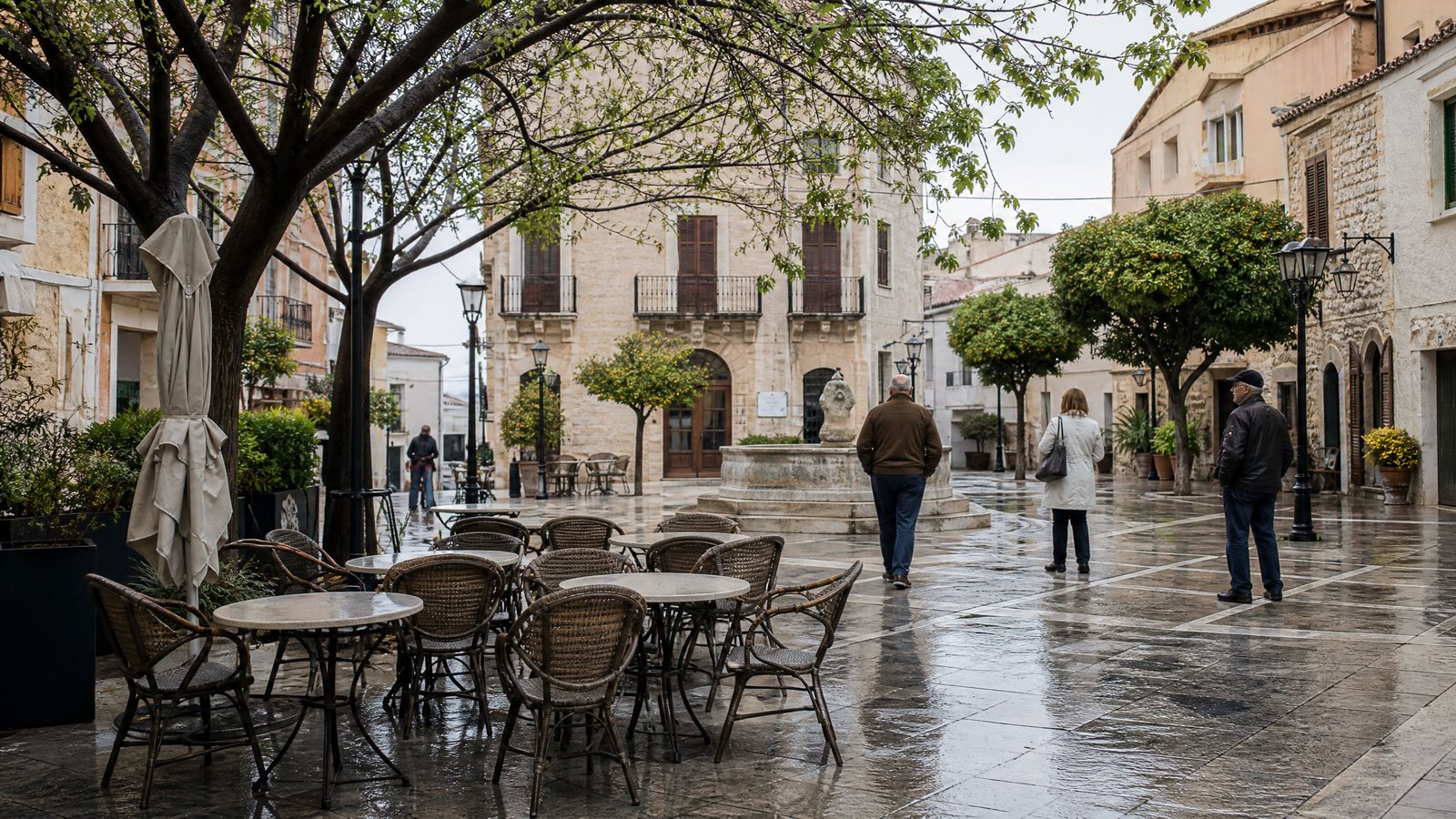
Short links favour overlapping uses: civic buildings near older streets, galleries near transit, or markets near a library. Do not confuse a covered segment with a fully protected route. Wind can drive rain under awnings, passages can crowd, and cobbles may be harder than an adjacent paved street.
Notice the street-level frictions
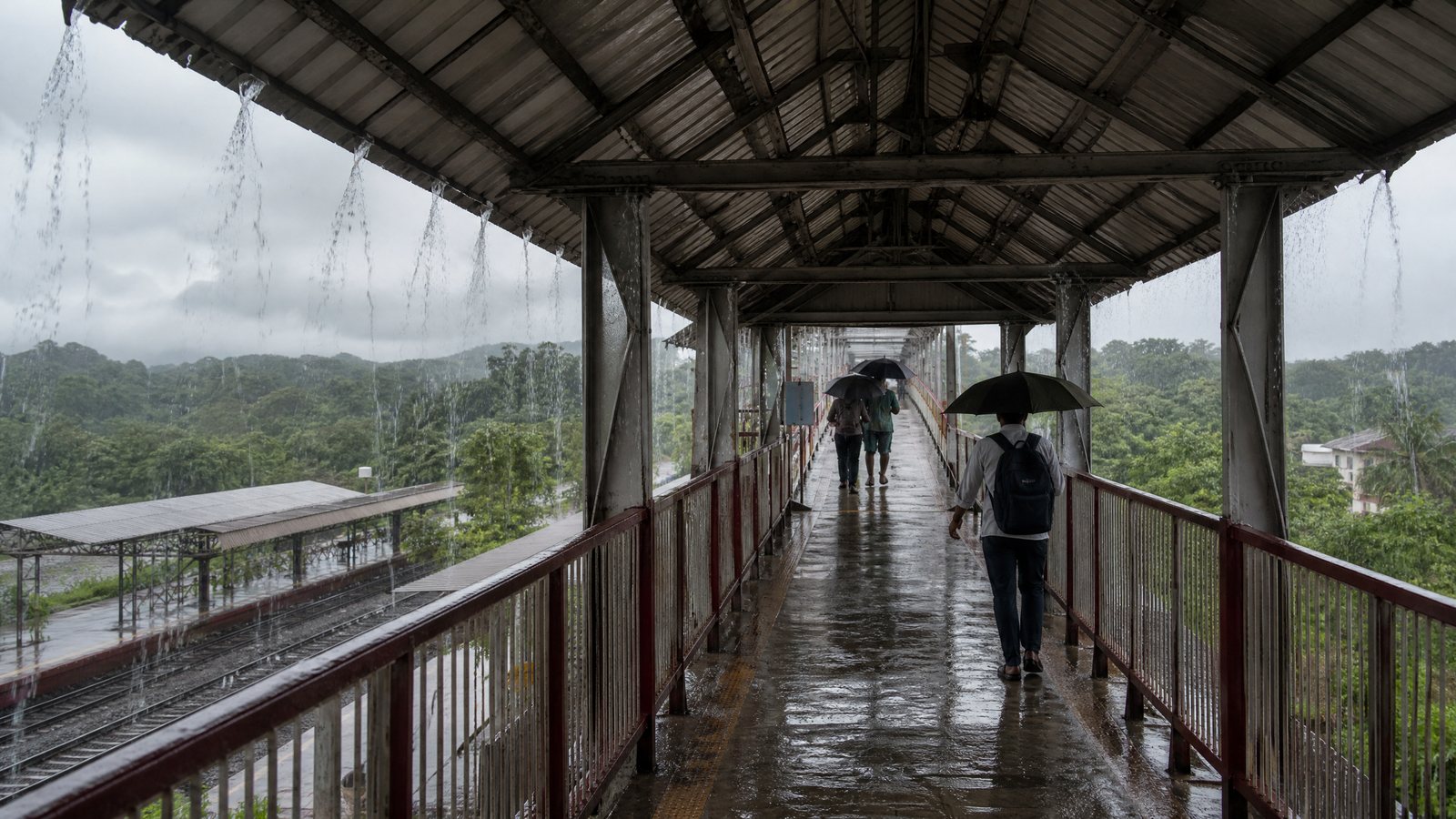
A compact-looking route may contain camber, pooled water, slippery leaves, polished floors, uneven paving, roadworks, poor light or exposed waits. Slow down at entrances, stairs and platforms. Use handrails where available; keep hands free enough to hold them. Footwear with dependable grip and a waterproof layer matter more than an imagined outdoor expedition. Protect documents and electronics without adding luggage the route cannot handle.
Do not wait in narrow doorways or crowd the accessible part of a pavement while folding umbrellas. Step aside only where it is safe and does not obstruct people using mobility aids, pushchairs or luggage. This small etiquette is part of route design: a rainy city is a shared environment, not a private obstacle course. If a link feels precarious, return to the anchor area rather than seeking a more distant substitute.
Treat transit slack as part of the itinerary
Transit slack is deliberate uncommitted time between movement and the next fixed point. Wet conditions can slow the approach to a station, lengthen boarding, change platform access or make a missed connection consequential. Put the day’s one fixed commitment—if any—after a generous arrival margin; keep the rest movable.
On the day, consult the local transport authority’s official status channel, not an old route screenshot. Where offered, compare fewer changes, less walking and step-free access with the fastest route. A simpler transfer and shorter exposed wait may be preferable even if it takes longer. Keep one alternative line, stop or return point; avoid a contingency with several unknown links.
This approach may frustrate travellers who enjoy maximising sights, yet it is valuable for anyone managing fatigue, children, luggage or a strict return deadline. For people who are comfortable walking and have no time-sensitive obligations, a modest detour can still be enjoyable if the weather is genuinely benign. The rule is to make the detour a choice, not the only way to preserve the plan. Building rest into a city day is a strength in any weather; these principles for designing rest days show how a pause can protect the rhythm rather than interrupt it.
Make accessibility a first decision, not a backup
An accessible route is more than an elevator at the destination. It includes the connected walking surfaces, kerbs or ramps, doorways, vertical access and the usable path between them. Rain can narrow that path through puddles, crowds, temporary works and wet surfaces. A route that is technically possible may still be impractical on a particular day for a wheelchair user, someone with limited stamina, a person who uses a cane, a traveller who is blind or low-vision, or a family with a pushchair.
Ask specific questions before committing to the anchor: Which entrance is usable? Does the route from the stop avoid steps? Is vertical access in service today? Is there seating before a queue, an accessible toilet, a lower-sensory room or a quiet place to wait? The answers are local and temporary, so confirm them through the venue and transport authority’s relevant official channels. Do not infer them from photographs, ratings or a generic accessibility symbol.
A direct entrance, short crossing and seat can help anyone carrying a child, recovering from travel, dealing with wet hands or navigating in low light. Needs differ: some prefer a longer quiet route; others need the shortest exposed segment. Agree on non-negotiables before setting out, then let the Rain Radius framework choose the scale.
Use indoor time with care and attention
Indoor space is shared space, not weather insurance. On arrival, follow staff instructions, bag checks, queuing arrangements and wet-item rules. Keep voices at a considerate level; silence a phone where the setting calls for it; do not touch collections, furnishings or display cases unless an exhibit explicitly invites contact. Food, drink, sketching, photography and umbrellas may be handled differently at every venue. Respecting those boundaries protects collections and prevents a busy wet day from becoming harder for staff and other visitors.
Resist turning the interior into a waiting room. Start with one room or object, take a seated break if available, then decide whether another section still interests you. A library or museum can offer quiet and a civic view of how a city holds knowledge. For more on shared public space, see our visitor-etiquette guidance.
A group can divide needs without dividing completely. One person may sit while another explores a nearby room; a child may need a snack break if the venue allows it; a companion may need to dry off before re-engaging. Set a simple meeting point and a return time only if both are workable in the building. Never assume that seating, a cloakroom or a café will be available just because it was present in past accounts.
Shape the day around weather windows, not hourly perfection
A rain-ready itinerary benefits from a loose sequence: a short first link, the anchor in the middle, a nearby meal or pause, then one optional small outing before the return. Placing the anchor early gives you a dry decision point and lets conditions change while you are occupied. Placing it in the middle can work when arrival weather is clearly calmer and the route is simple. Neither sequence is universally better; choose the one that avoids making the last exposed link occur when energy, daylight or forecast confidence is lowest.
Use weather windows as opportunities, not appointments. If rain eases, take the next short link; if it resumes, remain inside or at the pause point. Do not chase a predicted dry hour across town. Repositioning can consume the benefit, especially with disruption or varied walking speeds. A small route leaves room to notice covered noticeboards, a book display or a view from under cover.
Families can alternate one short objective with warmth and a seat; solo travellers can use the same structure to avoid decision fatigue. Groups should name a stopping rule before the first walk, such as choosing only one nearby option after the anchor. Changing conditions call for proportionate adjustments, not heroics; explore the seasonal travel collection for related planning perspectives.
Complete a final confirmation pass—and know its limits
On the morning, check the forecast and official warnings for the precise area and travel time; the anchor’s opening, entry and accessibility; and live local transport status, including station access. Then look again at the two shortest walking links in the actual light and weather. This turns a general plan into a decision for present conditions.
Compact rainy-day checklist
- [ ] I know whether today is rain-ready, reduced-radius or safety-first mode.
- [ ] The cultural anchor and one nearby alternative are currently usable for our needs.
- [ ] We have a direct outward route, a simple return route and enough transit slack.
- [ ] Each essential walk is short, with a safe pause or retreat option.
- [ ] Wet outerwear, footwear, bags and any mobility equipment suit the route and venue rules.
- [ ] Everyone knows the fallback: return to the anchor area, shorten the day or stop.
Confirmation has limits: forecasts and service data can change, staff may alter access arrangements, and a downpour can make a familiar pavement unsuitable. Official warnings and local emergency instructions outrank this article, a map and preference. If floodwater is present, do not enter it or circumvent a barrier. If there is thunder or lightning, seek an enclosed building and suspend outdoor movement. If mobility, temperature or fatigue changes the safety margin, use the least complicated way to get dry, warm and rested, even if that ends the route.
Let the smaller day be the successful one
A rainy city itinerary succeeds when it protects attention, comfort and a sensible way home—not when it preserves every original stop. Choose one neighbourhood, place a meaningful indoor anchor at its centre, treat walking as short links and allow transit, access and weather to decide the day’s scale. This is not surrender to rain. It is a more accurate reading of the city and of the people moving through it.
When the plan contracts, people often notice more: a building’s threshold, one strong room, the choreography of transit, a well-timed seat. Carry the Rain Radius forward, confirm changeable details, and let safety instructions settle the non-negotiables. Rain simply asks for a closer route.