Field Notes
Kauaʻi after Hurricane Lowell: the visitor access status on 13 September
Kauaʻi’s recovery snapshot for 13 September combines a one-day transit suspension and continued recreation closures with airport, cargo-harbor and port operations that have stated limits.
Recovery access — 13 September transit suspension; parks remain closed; airport and ports operating with stated limits.
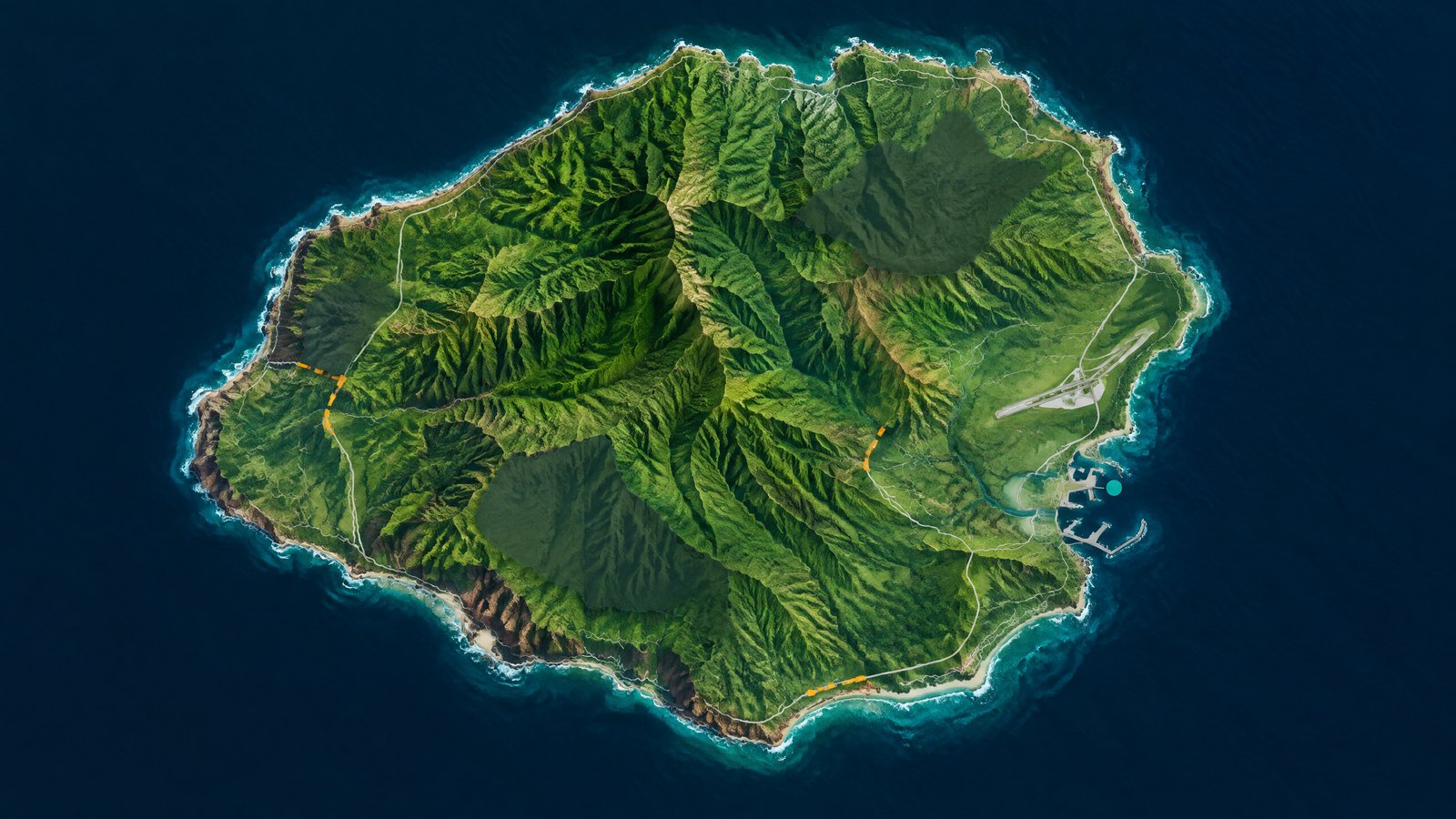
A 13 September recovery snapshot, not an island-wide verdict
Reference point: Sunday, 13 September 2026. This revision is based on the County of Kauaʻi Hurricane Lowell recovery bulletin distributed at 18:36 HST on 12 September. It describes a mix of continuing closures, a time-bounded public-transport interruption, recovery road work, and essential airport and port functions with stated limits.
That mix matters more than a destination-wide label. The bulletin does not establish that all of Kauaʻi is open or closed. It does not determine every road, beach, hotel, private attraction, flight, boat trip, or address. A plan should match the exact service, route, provider, and time involved.
This is a 13 September recovery snapshot, not a prediction about conditions after it. For comparable reporting that keeps a date and an authority visible, browse RAAHCHAL’s Field Notes. For the planning method behind a last-minute weather or operational check, see how far ahead weather is useful.
What changed from the 11 September snapshot
The reason for this in-place revision is specific. The prior 11 September County snapshot described Kauaʻi Bus and paratransit operating every two hours. The newer County bulletin says that no bus routes will operate on Sunday, 13 September and that regular bus and paratransit service resumes Monday, 14 September. It also says the 900 and 950 Anahola–Waimea express routes will not run during the week of 13 September.
The Sunday suspension is a material change from reduced service to no scheduled fixed-route or paratransit service for that named day. It should not, however, be turned into an indefinite closure. The County stated a Monday resumption, and this article reports that schedule as a dated County statement rather than a guarantee that a particular ride, pickup, accessible vehicle, or connection will be available.
Some restrictions continue rather than newly appear. County parks, campgrounds, and the Wailua Golf Course remain closed; state parks and forest reserves also remain closed. Their continued status is important for a visitor plan, but the changed transport information and the additional operational detail are what require the update. The original publication remains part of this article’s record; this is a revised reading of a later bulletin, not a second Hurricane Lowell or bus-closure page.
Access-state table for 13 September
The table is deliberately narrow. “Open” applies only to the function named by the County, and “check before moving” means a route or decision still needs a current, location-specific answer.
| Access state | County status in this snapshot | Practical reading for visitors |
|---|---|---|
| Closed | County parks, campgrounds, and Wailua Golf Course; state parks and forest reserves. The County also lists the Waimea and Kapaʻa pools as closed. | Do not build a day around these named public recreation facilities. This does not label every beach, trail, private venue, or accommodation open or closed. |
| Suspended on a stated date | No Kauaʻi Bus routes on Sunday, 13 September; regular bus and paratransit service is scheduled to resume Monday, 14 September. The 900 and 950 express routes will not run during the week of 13 September. | A Sunday bus or paratransit leg needs another confirmed arrangement. Do not carry the Sunday suspension forward as an indefinite status. |
| Open with stated limits | Līhuʻe Airport is open and back on regular power. Nāwiliwili Harbor is open to cargo ships, with no cruise ships coming in. Port Allen is open for operations; the County’s detailed update says nighttime operations are the exception. | These statements describe the named operational functions, not an individual flight, cruise itinerary, passenger vessel, terminal process, or private transfer. |
| Check before moving | Hanalei Bridge work is planned with one lane and alternating traffic; the Wainiha double bridges are local traffic only with a five-ton limit. Clearing and other road limits remain. An islandwide brown-water advisory and water-conservation notice remain. | Confirm the exact road, provider, and exposure before leaving. Never treat a partial road update, a harbor cargo status, or a system-wide notice as an answer for the entire journey. |
Bus and paratransit: a dated interruption
On Sunday, 13 September, the County said no bus routes would be operating. It also said regular bus and paratransit service would resume on Monday, 14 September. Those are separate date-specific statements: the former is the status for Sunday; the latter is the stated restart date. The County additionally said the 900 and 950 Anahola–Waimea express routes would not run in the week of 13 September.
A scheduled resumption is useful, but it is not enough to promise a workable journey. The bulletin does not publish a stop-by-stop timetable, a same-day vehicle assignment, capacity, pickup confirmation, accessible boarding condition, or a protected transfer to an airport, lodging, appointment, or activity. A person travelling on Monday should confirm the current service that applies to the intended trip rather than infer it from the Sunday-wide pause.
When transport is essential rather than optional
The distinction is especially important when a bus or paratransit trip supports medication, mobility equipment, a medical or care appointment, a child’s schedule, a flight, or a fixed lodging change. In those cases, first ask whether the accommodation and the actual transport provider can support the full chain. A broad statement that regular service resumes does not answer whether a particular pickup can meet a particular need.
If that answer is uncertain, reduce the number of irreversible commitments. A shorter, local day or a postponed discretionary movement can be more realistic than attempting to replace a cancelled public-transport leg with an improvised sequence. The recovery goal is not to preserve every original activity; it is to avoid making an essential movement depend on an unconfirmed link.
Roads, bridge work, and driving choices
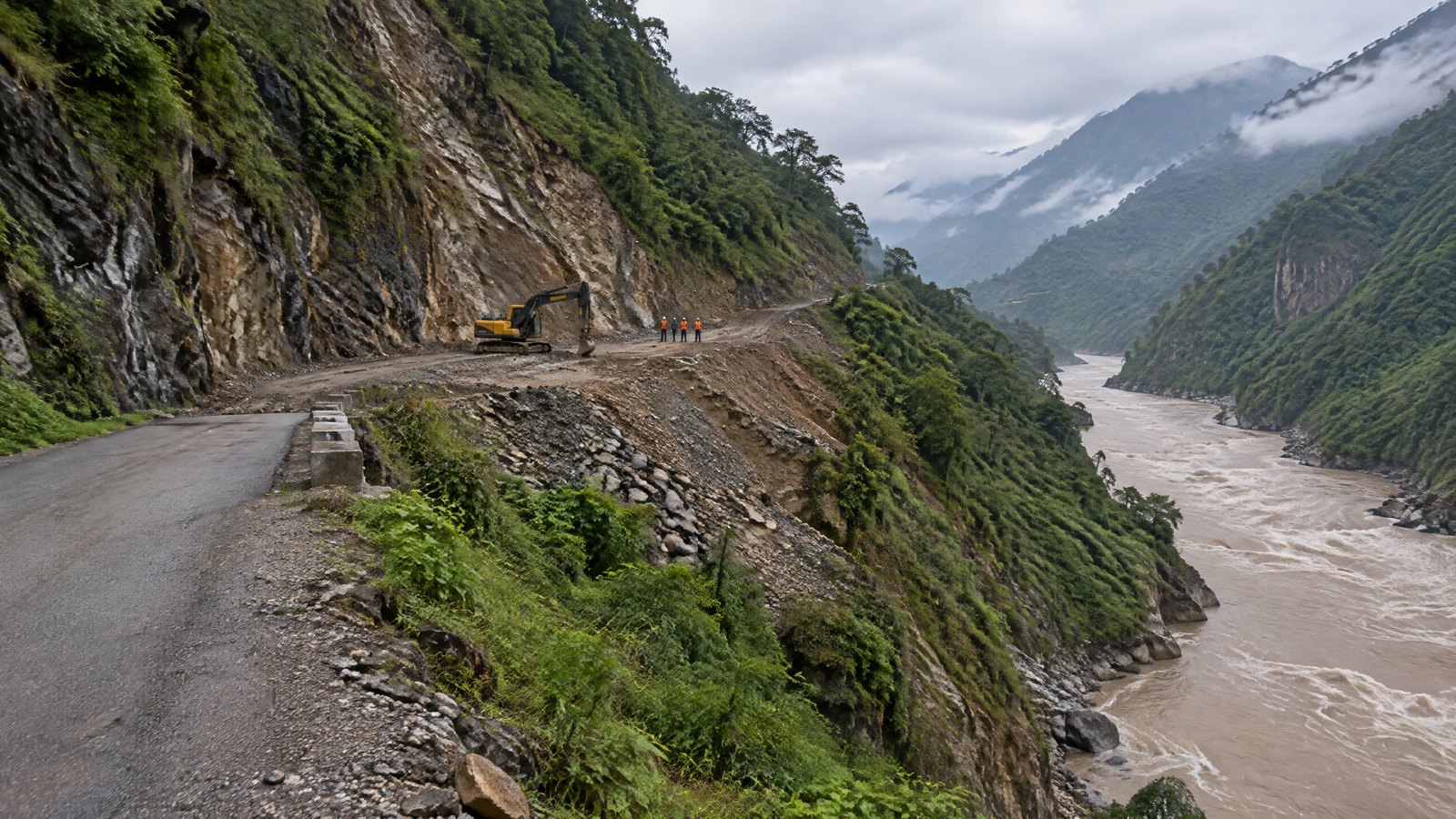
The County’s 13 September material gives several road details but not a clean island-wide driving map. On Sunday, KIUC work was expected on the Hanalei side of the Hanalei Bridge, requiring a one-lane closure with alternating traffic. The County said the work might take eight hours or more, could continue into the early evening, and would use flaggers. This is a work-zone limitation, not a statement that the bridge is wholly closed.
Other boundaries are more restrictive. The County said Kūhiō Highway routes 56 and 560 were open through Hāʻena, while the Wainiha double bridges were open only to local traffic and subject to a five-ton weight limit. That local-only condition is not a visitor detour or a sightseeing route. Kōkeʻe and Waimea Canyon roads were still being cleared; Ahukini Road was fully open. Halewili Road was open from the ʻEleʻele side of Kaumualiʻi Highway but remained closed from the Kalāheo side to Kauaʻi Coffee because of downed utility poles.
The bulletin also announced a planned Monday, 14 September lane closure on Kaumualiʻi Highway between Kipu Road and Kaumakani from 08:30 to 13:30. That is a scheduled next-day work item, not a claim about Sunday traffic. More closures were possible as crews continued clearing roads. Police urged the public to travel only if necessary, to obey barricades and flaggers, and not to use emergency activity or storm damage as a reason for sightseeing. Treat dark traffic lights as four-way stops, allow time for recovery work, and do not use unofficial detours. The disciplined source-matching approach in RAAHCHAL’s wildfire-smoke travel decision framework is useful here as a method, not as a comparison between the events.
Airport, harbor, and port: check the arrival chain
Līhuʻe Airport was open and back on regular power in the County snapshot. The County advised arriving 90 minutes early for interisland flights and two hours early for flights to the continent. Those timings are local operational guidance; they do not establish that a particular airline flight is operating, that an airline’s check-in process is unchanged, or that the road journey to the airport will run normally.
Nāwiliwili Harbor was open to cargo ships, but the County said no cruise ships were coming in. Cargo movement and a cruise call are different operational questions. A cargo-harbor status cannot confirm a passenger itinerary, shore arrangement, terminal procedure, or local transfer.
Port Allen was open for operations. The County’s detailed update specifically rejected rumours of a full Port Allen closure and said it was open for full operations except nighttime operations. That correction should not be expanded into a statement about every boat, passenger service, booking, or transfer. Anyone whose plan depends on a named carrier or waterfront provider needs that operator’s current confirmation.
Parks, water, power, and lodging resilience
The continuing public recreation closures are clear in this snapshot: County parks, campgrounds, and Wailua Golf Course are closed; state parks and forest reserves are closed. The Pacific Missile Range Facility’s recreation sites and guest-pass programme are also listed as closed. These categories warrant a conservative itinerary, but they do not answer the separate status of every beach, private attraction, trail access point, hotel, or restaurant.
An islandwide brown-water advisory remained in effect. The County advised staying out of floodwater and out of ocean water near stream mouths, drains, and harbors because it may carry sewage, animal waste, chemicals, and debris. This is an exposure warning, not an open-or-closed designation for every shoreline. Water activity, water quality, site access, and provider operation each require their own current answer.
The County said about 76% of the island had power restored as of Saturday afternoon, with roughly 8,400 members still out. It also said water systems were fully restored, while an islandwide water-conservation notice remained because remote Department of Water sites still relied on generator power. The notice asks people to use water only for essential needs and warns that outages can affect pumps and wells. These system figures do not guarantee power, water pressure, lift operation, charging, refrigeration, or backup power at a specific lodging address.
The County said Hawaiʻi was still welcoming visitors while encouraging people with upcoming Kauaʻi trips to consider another island to allow recovery time. That is guidance from this recovery bulletin, not a universal accommodation or entry rule. A private host or hotel remains responsible for its own current conditions and services.
A low-pressure visitor checklist
Use the following checklist close to the actual day of movement. It is designed to keep the most important decisions reversible when a public status is mixed.
- [ ] Confirm the stay first. Ask the accommodation about current access, water, power, charging, lift or mobility-device needs, and any restrictions that matter to the individual booking. Do not infer the answer from island-level restoration percentages.
- [ ] Confirm each transport link. Check the actual airline, bus, paratransit, taxi, rental, or activity provider for the intended date and time. For Sunday, 13 September, do not plan around Kauaʻi Bus or paratransit; for Monday, confirm the stated resumption applies to the trip.
- [ ] Test the route rather than a destination label. Compare the exact road corridor, bridge or work zone, arrival time, and local directions. Respect local-only restrictions, barricades, police directions, and flaggers.
- [ ] Keep water and outdoor exposure optional. Treat the brown-water advisory, floodwater, stream mouths, drains, and harbor areas as distinct exposure questions. Keep a low-exposure alternative rather than forcing a water-dependent plan.
- [ ] Protect essentials. Keep medication, needed charging or mobility support, identification, drinking water, and accommodation contacts accessible rather than separated in a vehicle or a tight sequence of transfers.
- [ ] Make time recoverable. Choose a day that can be shortened without a risky drive or missed essential connection. Designing rest days explains how to make flexibility part of the plan instead of an afterthought.
For a family, a traveller with disability-related needs, or anyone depending on fixed care, a full transit pause and uneven utilities raise the value of a provider-specific answer. Ask about dependable pickup, a safe route, power support, and the practical time required for essential movement. Do not assume advertised accessibility features are operating normally during recovery.
Recovery etiquette is equally practical. Do not go out to view storm damage, follow police escorts, stop for photographs near hazards, or ask staff, drivers, or crews to take avoidable risks for an itinerary. RAAHCHAL’s community-respect guide offers the broader principle: behave as a considerate temporary neighbour while local recovery work has priority.
Verification note and revision triggers
Last editorial verification: 14 September 2026, 00:26 IST. This article is a historical status report for the 13 September recovery snapshot drawn from the County bulletin distributed at 18:36 HST on 12 September. It retains the article’s original 12 September publication lineage and does not describe a permanent transport closure.
A further revision should follow only a material newer County status bulletin, a named transport or provider statement, an authority reopening or closure, or an official water or utility change that alters a traveller-facing condition. Until then, use the source date, the exact provider, and the particular route or facility to make the next decision. RAAHCHAL’s editorial policy explains why a timestamped authority notice is kept separate from broader claims it cannot support.