Slow Travel
The Himalayan Rail Journey That Makes Time Feel Useful Again
A practical field guide to treating the railway as part of the journey, not simply the space between two stops.
Begin with the pace, not the timetable
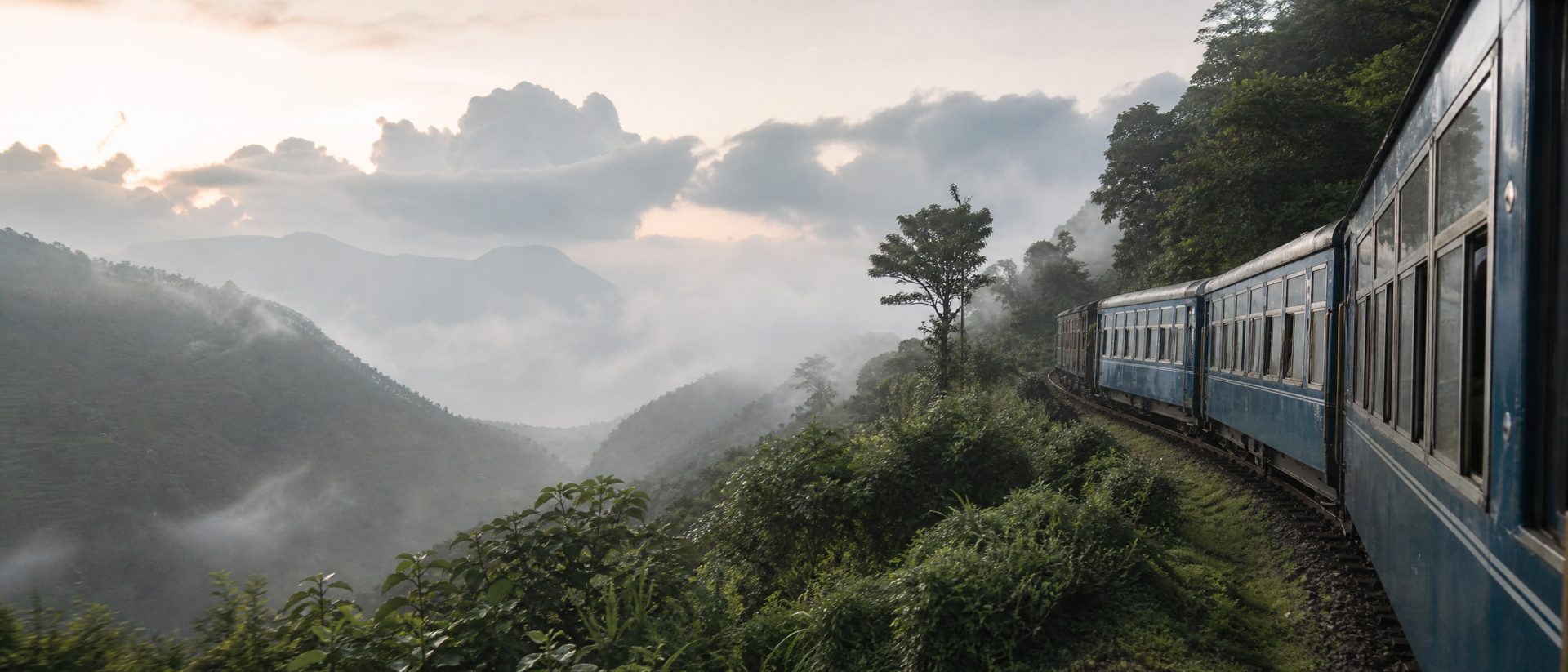
A mountain railway is not an efficient way to erase distance. That is exactly why it matters. Curves, station pauses and weather make the landscape legible in a way a fast transfer cannot. Plan the rail day as a full experience rather than an arrival day packed with sightseeing.
Build in one night of slack
Hill weather can change quickly and historic lines need careful maintenance. Keep the evening after your journey uncommitted. A flexible buffer protects the rest of the itinerary and turns a delay from a crisis into part of the story.
Pack for the carriage
Bring one small bag you can lift without help, a refillable bottle, a warm layer and simple food. Keep documents and medicine with you. Avoid spreading belongings across shared seats; older coaches are compact and the most comfortable journeys are cooperative ones.
Read the landscape
Notice how vegetation, architecture and temperature change with altitude. Stations are not just photo stops: they are working places for residents. Give commuters room, ask before photographing people and take every piece of waste with you.
Status note
Rail schedules and operating sections can change with weather and maintenance. This guide explains planning principles, not live transport status. Confirm the current service locally before departure.