India · Rajasthan Stepwells
Reading Rajasthan Through Its Stepwells
These structures are not backdrops: they are records of water, labour, climate and public life.
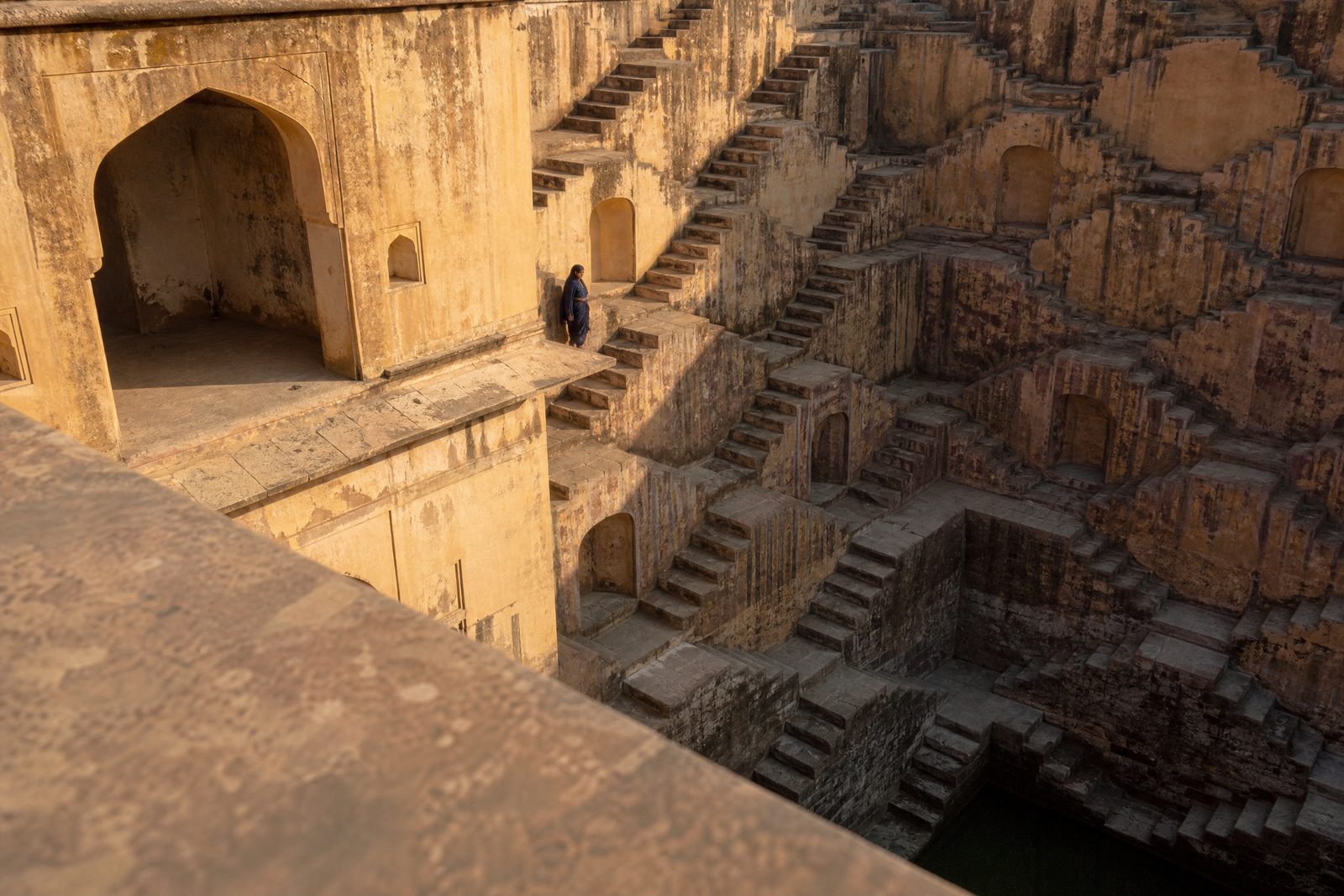
Architecture shaped by scarcity
A stepwell translates a falling water table into public architecture. Flights of stairs descend through changing levels, creating shade and access across seasons. Their geometry is beautiful, but function came first.
Visit with context
Read the information available at the site and notice differences in ornament, depth and relationship to nearby settlements. Some structures were civic, some associated with temples or royal patronage, and many carried complex social rules.
Protect fragile places
Do not climb closed sections, leave offerings where they are not permitted or lean equipment against carved stone. Historic water structures can be unstable and sudden drops are common. Follow barriers even when other visitors do not.
Photograph without taking over
Use a small setup, keep passages open and avoid turning local worship or routine activity into an uninvited portrait session. Early and late light are gentler, but the best photograph is never worth blocking access.
Build a wider route
Pair the best-known stepwells with a museum, old neighbourhood or smaller town. The comparison helps reveal that water architecture is not one monument type but a long regional conversation with climate.